1 / 51Use ← → to flip
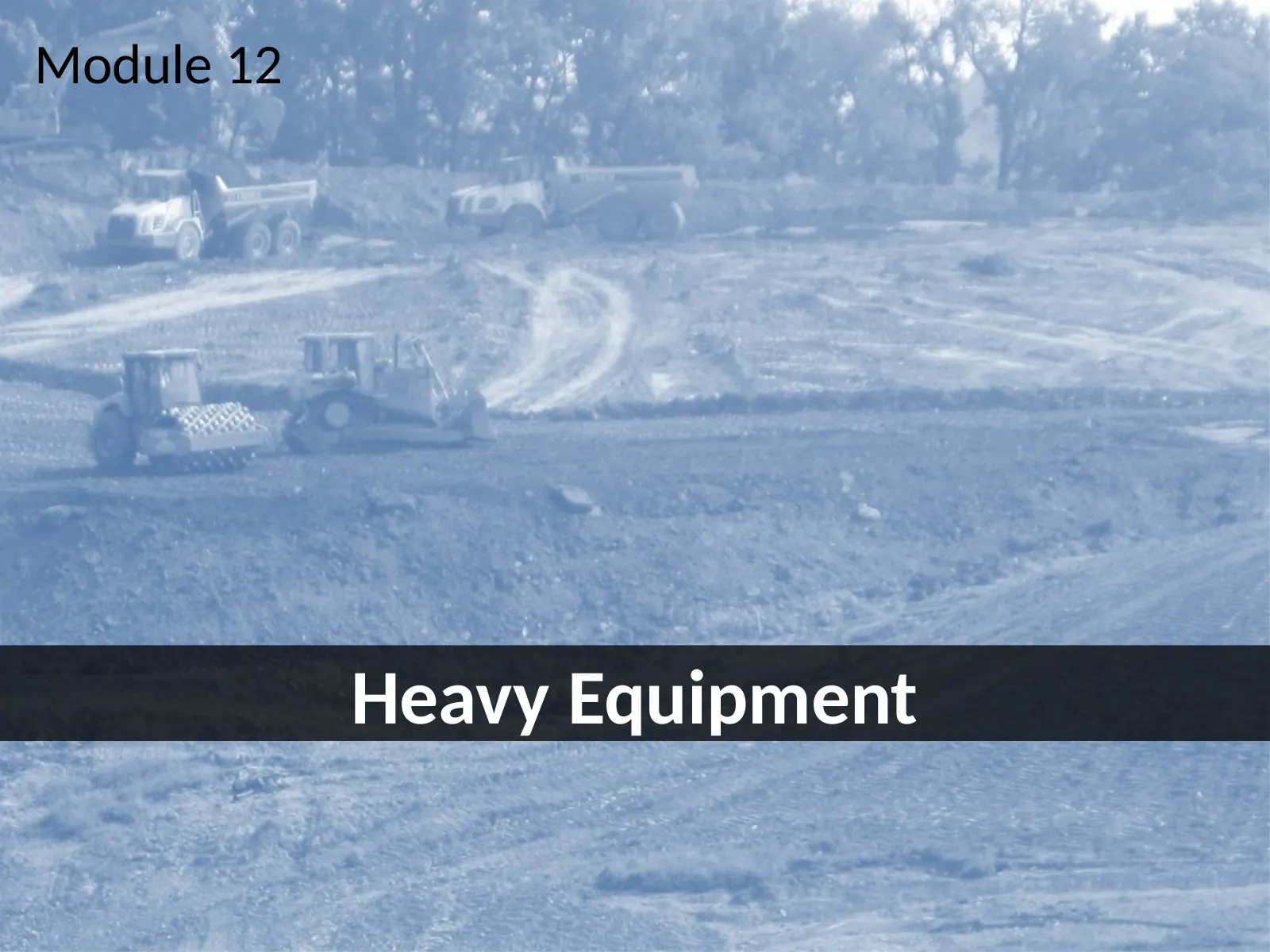
Heavy Equipment
Heavy equipment hazards (struck-by, rollover, blind spots, maintenance) from the WVU oil and gas site-preparation course; applies to any earthmoving site.
Slide text
· 45 of 51 slides · by West Virginia University
The words on each slide as the author wrote them, read from the file by software so they can be searched. Layout, pictures and tables are not shown here: the slides above and the download are the original.
- Slide 1
Module 12
- Heavy Equipment
- Slide 2
Objectives
- After this module you should be able to
- identify the most common heavy equipment hazards
- take the steps necessary to avoid those hazards
- Slide 3
Heavy Equipment Hazards
- Being struck by or run over by equipment Equipment rollovers
- Making contact with power lines
- Defective equipment
- Not using the equipment according to the manufacturer’s instructions
- Getting caught in moving parts
- Being crushed by elevated components which fall Equipment fires
- Falls
- Hearing loss
- Loading and unloading equipment
- Slide 4
- inspections of heavy equipment are essential for safe operation
- this operator is completing his daily inspection
- Slide 5
Pulling Equipment from Service
- Reasons to pull a piece of equipment from service and tag
- inoperative backup alarm or horn
- defective or missing fire extinguisher
- defective or missing seat belt
- brake problems
- broken or missing mirrors
- cracked, broken, or missing glass
- defective doors or latches that prevent operator exit
- fluid leaks that could affect safe operation
- any other safety or health hazard likely to cause serious harm
- Slide 6
this disabled backup alarm was discovered during a preshift inspection
- Corrective Action: this machine should be pulled from service, tagged, and repaired
- Slide 7
- operators may not always see a worker approaching them
- approach equipment only after making eye contact and signaling the operator; wait for their approval
- Slide 8
- while the equipment is running, this worker is in an unsafe position talking with the operator
- Corrective Action: never enter into the direct path of moving equipment (or equipment that may move unintentionally)
- Slide 9
this is a much safer place to be
- Slide 10
this worker is in the direct path of travel and can’t be seen
- Corrective Actions: never forget that equipment has blind spots; work defensively
- Slide 12
- improper parking can result in out-of-control and runaway equipment which is a hazard to both the operator and ground workers
- when getting off the equipment, make sure to set the brake, place the transmission in park, and ground all attachments
- Slide 13
- equipment rollovers often result in the operator being ejected and crushed
- simply making seatbelt use a habit may save your life
- Slide 14
- valuable safety-related information can be found in the operator’s manual
- this operator is taking a moment to review the safe operation of his piece of equipment
- Slide 15
untied laces can get caught in moving parts, on pedals, or cause a fall
- Corrective Actions: double tie your laces; check them occasionally
- Slide 16
unsupported machine components can drop unexpectedly
- Corrective Actions: use the support provided by the manufacturer; if a support is not provided, crib, chock, or block; never place any part of your body, even for a moment, under any suspended load or elevated piece of equipment
- Slide 17
- you, your equipment, and materials must stay at least 10’ from powerlines
- you should be told by your supervisor when a greater approach distance is required due to higher voltages
- Slide 18
- this photograph was taken after a truck loaded with heavy equipment caught these lines and tore them down
- ensure that the load being hauled is low enough to clear power lines
- Slide 19
- guy wires from the rig must be visibly marked
- although this was a good start, these guy wires need several more flags per wire for visibility
- Slide 20
- a fire extinguisher should be mounted on every piece of heavy equipment
- ensure that every piece of equipment has an extinguisher and that it is inspected periodically
- Slide 21
this attachment lacks a safety pin; the attachment could come off and strike a ground worker
- Slide 23
- unsecured items in the cab can end up under pedals, interfere with safe operation, or can hit a worker in the event of a rollover
- Corrective Actions: keep unnecessary items out of cab; secure those that must be there
- Slide 24
- take the time to read and follow all warning labels, many workers would be alive if they had
- Slide 25
- rags and other items can create serious fall hazards in and around equipment access points
- Corrective Action: keep steps and other equipment access areas clear and clean
- Slide 26
- most equipment makes enough noise to eventually damage your hearing
- this worker is protecting his hearing in a loud environment
- Slide 27
Motor Vehicles
- If driving is part of your job, take the following steps
- use safety belts
- always drive within the speed limit
- do not drive if you are fatigued
- be familiar with the maintenance procedures for all vehicle systems
- avoid using cell phones while driving, and
- avoid other potentially distracting activities such as eating, drinking, or adjusting non-critical vehicle controls while driving
- Slide 28
this driver realizes the importance of maintaining his truck in safe operating condition
- Slide 29
- this driver realizes that motor vehicle crashes lead to more work-related fatalities than all other causes
- Slide 31
- unsecured tools and other items can become dangerous projectiles in the event of a motor vehicle crash
- Corrective Action: avoid having unsecured objects in the cab of your truck
- Slide 32
- gates can pose a serious hazard if left partially open or won’t remain fully open
- Corrective Actions: ensure that a gate is either fully open or closed; approach gated areas with caution; report gates that will not remain open
- Slide 36
- well tenders spend a lot of time loading, unloading, and operating their ATV’s
- what are some of the hazards associated with work-related ATV use?
- Slide 37
All-Terrain Vehicles (ATV’s)
- If operating one is part of your job, take the following steps
- become familiar with local hazards
- do a preoperational check (T-CLOC)
- do not carry passengers
- always turn off engine when ATV is parked. Remove key and set brake
- when carrying equipment, equalize the load to maintain balance, stability, and center of gravity
- Slide 38
All-Terrain Vehicles (ATV’s)
- If operating one is part of your job, take the following steps, continued
- do not drive recklessly or engage in horseplay
- do not cross deep or swift moving water
- modify an ATV only with manufacturer’s written approval
- always wear proper PPE; most importantly your helmet!
- operate according to the manufacturer obey the warning labels
- Slide 39
- this operator realizes the hazards associated with loading and unloading an ATV
- it is important to use loading ramps that are wide enough and secure firmly to the truck bed
- Slide 40
take advantage of operator training courses whenever possible
- Slide 41
Applicable Standards
- 1926 Subpart O Motor Vehicles, Mechanized Equipment, and Marine Operations
- 1926 Subpart W Rollover Protective Structures; Overhead Protection
- Slide 42
Your Employer Is Responsible For
- Providing the right equipment for the job
- Maintaining the equipment
- Training you on the hazards and safe work practices associated with each machine
- Responding to and correcting hazards pointed out by you, the worker
- Slide 43
You Are Responsible For
- Only operating the equipment you are authorized to operate
- Operate according to the manufacturer
- Reading and following all warning labels
- Operate equipment so no hazards are created for yourself and other workers
- Correcting the hazards you are able to correct
- Reporting to your supervisor the hazards you are unable to correct
- Slide 44
Case Study
- An operator decided wearing his seat belt was unimportant. When his dozer slid down a steep bank ending up on its side, his head was crushed by the dozer’s rollover protective structure.
- Slide 45
Always Remember
- Do a pre-shift inspection every day
- Do not run a piece of equipment with defects that may affect safe operation
- Ensure there is a fully charged extinguisher on the piece of equipment
- Make sure the manufacturer’s operating manual is on the machine
- Operate equipment according to the manufacturer’s instructions and obey all warning labels
- Seat belts are to be used all of the time
- Slide 46
Always Remember
- Hearing protection is required while operating equipment
- Cabs are to be free of all unsecured tools or other loose items
- Operate equipment so no hazards are created for yourself and other workers
- Be aware of blind spots, the swing radius of equipment, and overhead powerlines
- Never place any part of your body, even for a moment, under any suspended load or elevated piece of equipment
- Slide 47
Always Remember
- When getting off the machine, you must set the parking brake, set the transmission in park, and ground all moving parts
- Approach equipment only after making eye contact and signaling the operator; wait for their approval
- Never place yourself within the swing radius or path of moving components (especially under)
- Never stand directly between wheels or on tracks when talking to the operator
- Slide 48
Memory Check
- 1. What is the best way to protect yourself from injury in the event of a rollover?
- a. wear heavy clothing and a hard hat
- b. wear your seat belt
- c. hold on tight
- d. take your hands and feet off the controls
- Slide 49
Memory Check
- 2. As an operator, how often should you inspect your piece of heavy equipment?
- a. the first day of the work week
- b. once a month
- c. each day prior to operation
- d. never, the mechanics will do that
- Slide 50
Memory Check
- 3. What should you do with a piece of heavy equipment when the backup alarm is not functioning properly?
- a. operate it with caution
- b. operate it as usual
- c. pull it from service
- d. pull it from service, tag, and repair it
- Slide 51
Memory Check
- 4. What should a ground worker do before approaching a piece of equipment and its operator?
- a. make eye contact
- b. signal the operator
- c. wait for their approval
- d. all of the above
More on Vehicles & Equipment
pptx
46 slidesIntroduction to Work Zone Safety
Introduction to roadway work zone safety from the North Dakota Safety Council work zone course.
North Dakota Safety CouncilArchivedOSHA Harwood grant
pptx
84 slidesMobile Equipment Safety
Mobile equipment safety in work zones: blind spots, backing, spotters and operator checks.
North Dakota Safety CouncilArchivedOSHA Harwood grant
pptx
343 slidesTraffic Control for Construction Workers
Temporary traffic control for workers: signs, channelizing devices, flagging and the parts of a work zone.
North Dakota Safety CouncilArchivedOSHA Harwood grant