1 / 53Use ← → to flip
Hazardous Materials Awareness, Section 1: Intro to Hazardous Materials
Section 1 of the Nova Southeastern University hazardous materials awareness course.
Slide text
· 53 slides · by Nova Southeastern University
The words on each slide as the author wrote them, read from the file by software so they can be searched. Layout, pictures and tables are not shown here: the slides above and the download are the original.
- Slide 1
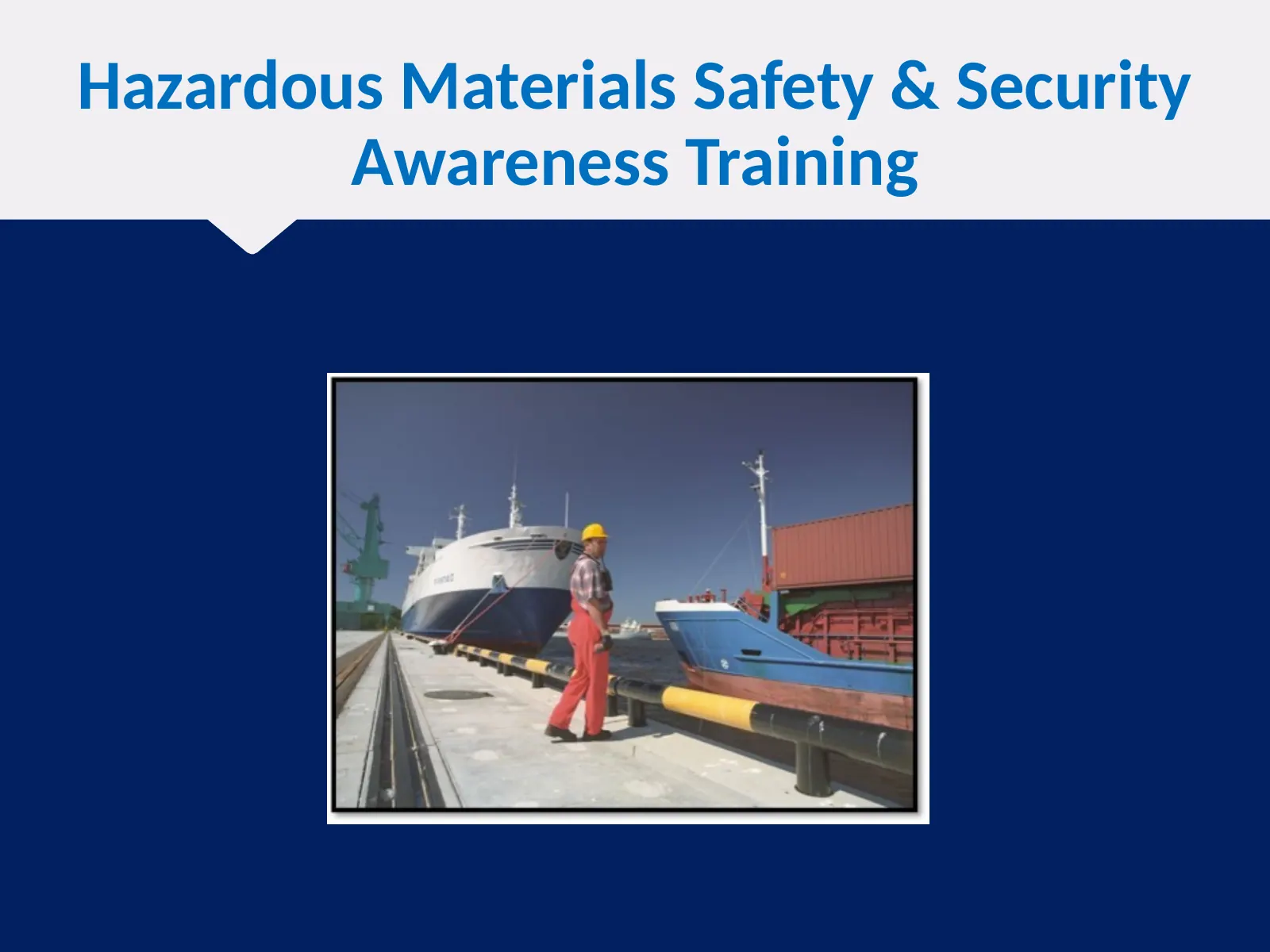
Hazardous Materials Safety & Security
- Awareness Training
- Slide 2
Funding Acknowledgement
- This material was produced under grant number SH-31200-SH7 from the Occupational Safety and Health Administration, U.S. Department of Labor. It does not necessarily reflect the views or policies of the U.S. Department of Labor, nor does mention of trade names, commercial products, or organizations imply endorsement by the U.S. Government.
- Slide 3
Course Administration
- Instructor and Participant Introductions
- Registration & Sign-In
- Pre-Test
- Restrooms and Break Area
- Tobacco Use and Smoking Area
- Life Safety Announcement
- Agenda Review
- Facilities
- Cell Phone
- Slide 4
Course Materials
- PowerPoint presentation slides
- Activity 1.1 Worksheet
- Other reference materials
- DOT Chart 15
- DOT Emergency Response Guidebook (ERG)
- Florida Small Quantity Generators of Hazardous Waste
- Slide 5
Course Objectives
- At the end of this course, students will be able to:
- 1. Recognize, identify, and understand hazardous substances and the risks they present
- 2. Understand the potential outcomes of, and learn to prevent, a hazardous material incident
- 3. Understand the role of the first responder (“first on scene”) and how to utilize the U.S. DOT ERG
- 4. Recognize the need for additional resources and how to notify those resources
- Slide 6
Course Outline
- Section I: Introduction to Hazardous Materials/WMD
- Section II: Utilizing the Emergency Response Guide
- Section III: Gathering and Analyzing Information
- Section IV: Initiating Protective Actions
- Section V: Criminal and Terrorist Events
- Slide 7
Section I
- Introduction to Hazardous
- Materials/WMD
- Slide 8
Section I Objectives
- Define a hazardous material
- Compare the difference between Hazardous Material Response and Daily Operation
- List the four Awareness-level responsibilities
- Know the Workers’ Rights guaranteed by the Occupational Safety and Health Act of 1970 (OSH Act)
- Slide 9
Purpose of Training
- Awareness
- Safety
- Notification
- Compliance with Code of Federal Regulations (CFR)
- OSHA/EPA/USCG
- Slide 10
Role of Local Government
- First line of defense regarding
- Hurricanes
- Tsunamis
- Tornadoes
- Hazardous Materials Incidents
- Prevention of Terrorist Incidents
- Slide 11
Role of Local Government
- Responsible for NIMS
- Emergency
- Management System
- Effective/Timely
- Response
- Intra-agency Coordination
- Security
- Preparedness
- Slide 12
Chemicals in Society
- ALL people utilize products made from hazardous materials.
- Many of these chemicals are:
- Extremely toxic
- Reactive
- Flammable
- Slide 13
Chemicals in Industry
- Industrial chemicals are often safely utilized without incident.
- Common causes of incidents include:
- Human error
- Package/Container failure
- Incidents/Accidents in deployment
- Heavy weather
- Slide 14
Hazardous Materials (Hazmat)
- Any substance (solid, liquid, or gas) capable of causing harm to people, property, and the environment.
- Slide 15
Hazmat Emergencies
- Hazmat Emergencies differ from Daily Operation
- Chemical properties require:
- Protective equipment
- Skills
- Attitudes
- Preparedness
- Slide 16
Hazmat Incidents
- Chemical breach of containers
- Not all incidents are emergencies
- Slide 17
Nature of Chemical Incidents
- We underestimate potential Hazards
- Fail to recognize potential hazards
- Lack of knowledge can be lethal
- Heighten your personal awareness
- Adopt a safety mentality and culture
- “I am going home tonight.”
- Slide 18
Awareness Level Worker
- Persons who, in the course of their normal duties, could encounter an emergency involving hazardous materials/weapons of mass destruction (WMD)
- Persons who are expected to recognize the presence of a hazardous materials/WMD, protect themselves, call for trained personnel, and secure the area
- Slide 19
Awareness Level Worker
- Includes:
- Maritime Workers
- Port Employees
- Shipboard personnel
- Venders
- Fire Service
- Law Enforcement
- Port/Waterfront Facilities
- Slide 20
Awareness Level Worker
- Includes:
- Vessel Crew/Staff
- Facility Operators/Staff/Industry Personnel
- Support Contractors/Venders
- Security Awareness
- Slide 21
Awareness Level Worker Responsibilities
- 1. Recognition/Identification
- 2. Notification
- 3. Isolation
- 4. Protection
- Work is done in a non-intervention mode!
- Slide 22
1. Recognition/Identification
- Recognize the presence of hazardous materials
- Identify if possible
- Gather information
- Slide 23
2. Notification
- Vessel Protocol/VRP Procedures
- FRP procedures
- Safety Zones
- Medical
- Provide Updates
- Slide 24
3. Isolation
- Your safety!
- Your security!
- Safety of others!
- Security of others!
- Evacuate/Safety Zones/ Deny entry
- Slide 25
4. Protection
- Initiate defensive actions
- Inform/Protect passengers and coworkers
- Inform adjacent facilities
- Protect/Inform First Responders
- Initiate Incident Command System (ICS)
- Slide 26
History
- Slide 27
Love Canal - Niagara Falls, NY 1978
- Originally a canal around Niagara Falls
- Purchased by Hooker Chemical in 1942
- Used as a waste disposal site
- 1942-1954 estimated 22,000 tons of waste
- Slide 28
Love Canal - Niagara Falls, NY 1978
- 1953 school district purchased for $1.00
- 1978 news reported health issues
- Led to the development of Comprehensive Environmental Response, Compensation and Liability Act (CERCLA)
- Slide 29
Texas City, Texas - April 6, 1947
- French ship “Grandcamp” caught on fire
- Cargo of cotton, twine, tobacco and ammonium nitrate fertilizer
- Fire started from a deckhand who was smoking
- Ship explosion killed 27 firefighters and 34 crew member
- Caused additional fires and explosions inland
- Events killed 550 people, 3,000 + injured
- Slide 30
Texas City, Texas - April 6, 1947
- Slide 31
Legislative Acts
- Clean Water Act of 1970
- Comprehensive Environmental Response, Compensation, and Liability Act of 1980
- Resource Conservation and Recovery Act, 1976
- Superfund Amendments and Reauthorization Act of 1986
- Slide 32
Hazard Communication (HAZCOM)
- 2012 Updates
- Comply with Global Harmonization System (GHS)
- Improve employee safety
- Enhance workers comprehension of chemicals
- Standardize Safety Data Sheets (SDS)
- Slide 33
Global Harmonization System (GHS)
- Globally used system
- Defines chemical characteristics
- Chemical classification system
- Labels
- Safety Data Sheets (SDS)
- Slide 34
Chemical Classification By Regulatory Agencies
- Department of Transportation (DOT)
- Environmental Protection Agency (EPA)
- Occupational Safety & Health Administration (OSHA)
- Global Harmonization System (GHS)
- Slide 35
Hazardous Material
- “Any substance … exposure which results or may result in adverse affects on the health or safety of employees…”
- Occupational Safety and Health Administration
- Slide 36
Hazardous Material
- “Any substance or material which has been determined to be capable of posing an unreasonable risk to health, safety, and property when transported...”
- Department Of Transportation
- Slide 37
Hazardous Material
- “Any waste material which is ignitable, corrosive, reactive, or “toxic” which pose a potential hazard to human health and safety and to the environment when improperly managed….”
- Environmental Protection Agency
- Slide 38
OSHA 29 CFR 1917 & 1918
- Specifically address maritime industry
- 29 CFR 1917 - Marine Terminals
- 29 CFR 1918 - Longshoring
- Each has a section for dealing with hazardous materials and emergency response plans
- Slide 39
NFPA 472 (2008 ed.)
- Professional Competency for Hazmat responders
- Original basis for 1910.120
- Exceeds EPA and OSHA requirements
- Expanded levels of competence
- Standard established for Fire Service
- Many industries also follow this standard
- Slide 40
NFPA 473
- Standard for competencies for EMS personnel responding to Hazardous Materials Incidents
- Addresses EMS competence
- Identifies levels of training
- Slide 41
Levels of Training
- Awareness
- Operations
- Incident Commander
- Technician
- Specialist
- Slide 42
Awareness Level
- Training level of this course
- Non-Intervention Activities
- Personal safety
- Safety of others
- Notification
- Activate Facility Response Plan (FRP)
- Activate Vessel Response Plan (VRP)
- Slide 43
Operations Level
- Defensive activities
- Initial response
- Protect people, property, environment
- May control product spread from safe distances
- Slide 44
Incident Commander Level
- Commands level above Operations level
- Training to the operations level plus incident commander
- May be any individual who may have to assume command
- Slide 45
Technician Level
- Offensive Activities
- Active role in leak control
- Comes in contact with product to stop further release
- Greatest potential for exposure
- Supervisory and technical role in response
- Slide 46
Specialist Level
- Offensive Activities
- More in-depth knowledge than Technicians
- Team leaders or industrial responders
- Specific knowledge
- Chemical transportation and process
- Slide 47
Hazardous Materials Officer and Safety Officer
- Hazardous Materials Officer
- Incident Commander selects
- Directs and coordinates all operations
- Hazardous Materials Safety Officer
- Operates the Incident Management System
- Hazardous materials branch/group
- Slide 48
Workers Rights
- Occupational Safety and Health Act of 1970 (OSH Act)
- Employers must provide their employees with working conditions that are free of known dangers
- Workplace safety and health standards are set and enforced by OSHA
- Slide 49
OSH Act Gives Workers’ Rights to:
- File a confidential complaint with OSHA
- Receive information and training about hazards, harm prevention, and the OSHA standards that apply to their workplace
- Review records of work-related injuries and illnesses that occur in their workplace
- Slide 50
OSH Act Gives Workers’ Rights to:
- Receive results from tests and monitoring done to find and measure hazards in the workplace
- Get copies of their workplace medical records
- Participate in an OSHA inspection and speak in private with the inspector
- Slide 51
OSH Act Gives Workers’ Rights to:
- File a complaint with OSHA if they have been retaliated against by their employer
- File a complaint if punished or retaliated against for acting as a “whistleblower”
- For additional information: www.whistleblowers.gov
- Slide 52
Summary
- First line of defense
- Awareness-level in a non-intervention mode
- Responsibilities:
- Recognize and Identify
- Notify
- Isolate
- Protect
- Agencies who define Hazmat and their definitions
- Different levels of training
- Slide 53
References
- OSHA 29 CFR 1910.120
- EPA 40 CFR 311
- OSHA 29 CFR 1910.1200
- NFPA 472
More on HazMat
pptx
49 slidesHazardous Materials (OSHA 10-Hour General Industry Outreach)
OSHA's own 10-hour General Industry Outreach deck on hazardous materials (v. 03-01-17), editable PowerPoint with trainer notes.
U.S. Department of Labor, OSHA (with the OTIEC Outreach Workgroup)Public domain
pdf
7 slidesHazardous Materials: Lesson Plan (OSHA 10-Hour General Industry Outreach)
Instructor lesson plan (objectives, timing, teaching steps) for the OSHA General Industry hazardous materials outreach deck.
U.S. Department of Labor, OSHA (with the OTIEC Outreach Workgroup)Public domain
pdf
2 slidesHazardous Materials: Knowledge Check (OSHA 10-Hour General Industry Outreach)
Student knowledge-check quiz for the OSHA General Industry hazardous materials outreach deck.
U.S. Department of Labor, OSHA (with the OTIEC Outreach Workgroup)Public domain