Student knowledge-check quiz for the OSHA General Industry bloodborne pathogens outreach deck.
Page text
· 2 pages · by U.S. Department of Labor, OSHA (with the OTIEC Outreach Workgroup)
The words on each page as the author wrote them, read from the file by software so they can be searched. Layout, pictures and tables are not shown here: the pages above and the download are the original.
- Page 1
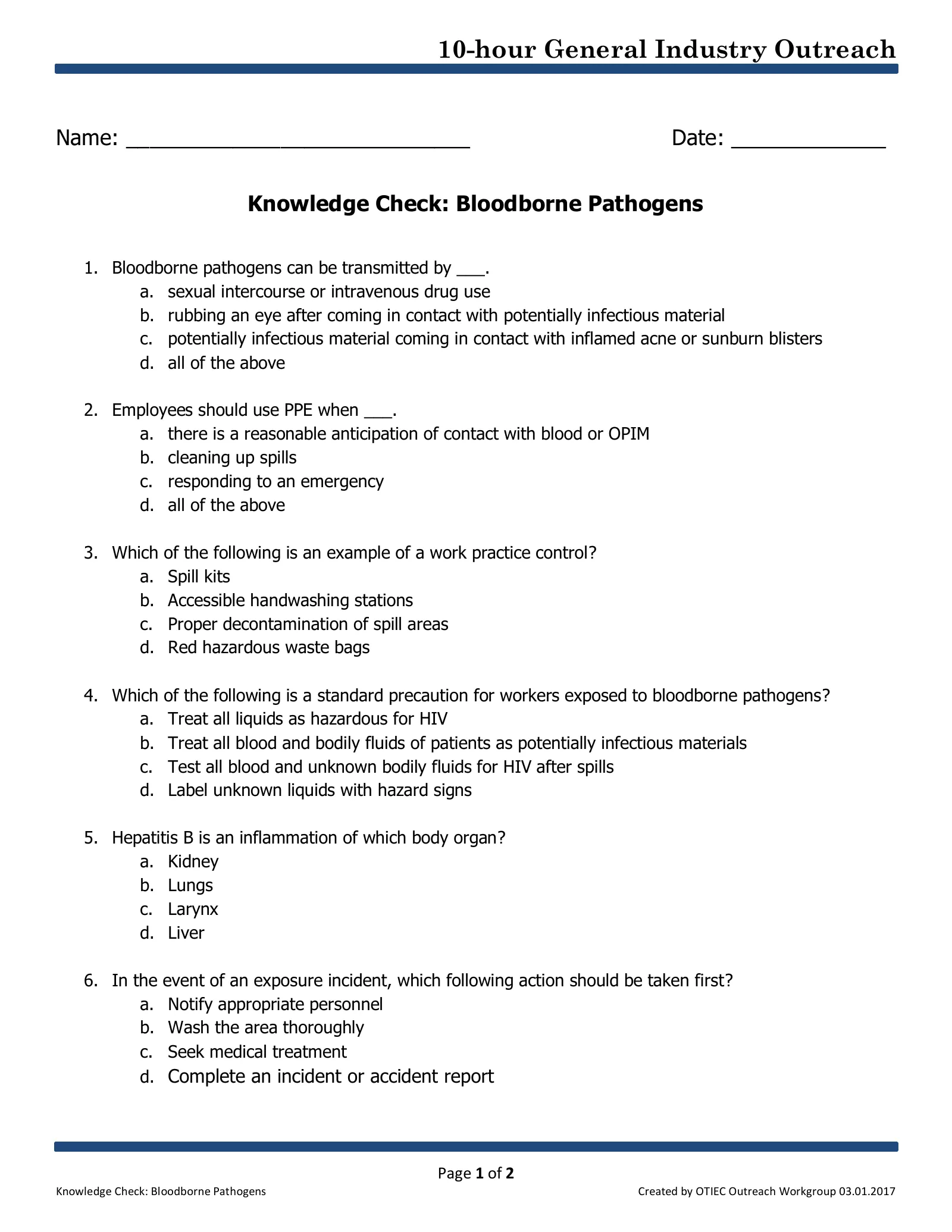
10-hour General Industry Outreach
- Name: ___
- Date: ___
- Knowledge Check: Bloodborne Pathogens
- 1. Bloodborne pathogens can be transmitted by ___.
- a. sexual intercourse or intravenous drug use
- b. rubbing an eye after coming in contact with potentially infectious material
- c. potentially infectious material coming in contact with inflamed acne or sunburn blisters
- d. all of the above
- 2. Employees should use PPE when ___.
- a. there is a reasonable anticipation of contact with blood or OPIM
- b. cleaning up spills
- c. responding to an emergency
- 3. Which of the following is an example of a work practice control?
- a. Spill kits
- b. Accessible handwashing stations
- c. Proper decontamination of spill areas
- d. Red hazardous waste bags
- 4. Which of the following is a standard precaution for workers exposed to bloodborne pathogens?
- a. Treat all liquids as hazardous for HIV
- b. Treat all blood and bodily fluids of patients as potentially infectious materials
- c. Test all blood and unknown bodily fluids for HIV after spills
- d. Label unknown liquids with hazard signs
- 5. Hepatitis B is an inflammation of which body organ?
- a. Kidney
- b. Lungs
- c. Larynx
- d. Liver
- 6. In the event of an exposure incident, which following action should be taken first?
- a. Notify appropriate personnel
- b. Wash the area thoroughly
- c. Seek medical treatment
- d. Complete an incident or accident report
- Created by OTIEC Outreach Workgroup 03.01.2017
- Page 2
10-hour General Industry Outreach
- 7. Which of the following actions can help prevent exposure to bloodborne pathogens?
- a. Wearing latex gloves
- b. Wearing goggles
- c. Washing hands
- d. All of the above
- 8. A vaccine is only available for which of the following major bloodborne pathogen viruses?
- a. HIV
- b. Hepatitis B
- c. Hepatitis C
- d. No vaccines are available for any of the three major BBP viruses
- 9. Which of the following are potential routes of entry for bloodborne pathogens?
- a. Mucous membranes of the eyes, nose, and mouth
- b. Non-intact skin
- c. Penetration by a contaminated sharp object
- Knowledge Check: Bloodborne Pathogens
- Created by OTIEC Outreach Workgroup 03.01.2017