1 / 83Use ← → to flip
Focus Four: Electrocution Hazards Instructor Guide
OSHA instructor guide/lesson plan for the Focus Four electrocution module.
Page text
· 73 of 83 pages · by U.S. Department of Labor, OSHA
The words on each page as the author wrote them, read from the file by software so they can be searched. Layout, pictures and tables are not shown here, and long pages are shortened: the pages above and the download are the original.
- Page 1
Construction Focus Four: Electrocution Hazards
- OSHA Training Institute
- I NSTRUCTOR G UIDE
- OSHA Directorate of Training and Education
- April 2011
- Page 3
Table of Contents
- TRAINER PREPARATION GUIDANCE … i Online Resources … ii
- Overview … 1
- Topic 1: What is an electrocution hazard? … 2
- A. Definition … 2
- B. Examples … 4
- C. Statistics … 5
- Topic 2. What are the major types of electrocution hazards in construction? … 6
- A. Contact with power lines … 6
- B. Contact with energized sources … 8
- C. Improper use of extension and flexible cords … 10
- …
- Page 5
TRAINER PREPARATION GUIDANCE
- The “Construction Focus Four: Electrocution Hazards” lesson is part of the 4-hour block consisting of segments on each of the Focus Four Hazards: Falls, Caught-In or -Between, Struck-By and Electrocution. Because most construction fatalities are caused by fall hazards, falls must be covered for at least one hour, and we recommend at least one hour and 15 minutes. …
- …
- Page 6
Online Resources
- California Department of Public Health: http://www.cdph.ca.gov/programs/ohb-face/Pages/Publications.aspx
- Construction Chart Book, Fourth Edition:
- http://www.cpwr.com/rp-chartbook.html http://www.elcosh.org/en/document/54/d000038/the-construction-chart-book-4th-edition.html
- Construction Safety: http://www.cdc.gov/niosh/topics/constructionsafety/
- …
- Page 7
Overview
- The purpose of this lesson is to provide workers with information that will enable them to recognize major electrocution hazards at construction worksites. This Instructor Guide (IG) is intended to be used when presenting the OSHA Training Institute Construction Outreach 10- and/or 30- hour course. The lesson is comprised of the following four topics:
- 1. What is an electrocution hazard?
- …
- Page 8
Instruction for this session:
- 1. Ask the class if they can give an example of an electrical hazard on a construction site that could cause a worker to be electrocuted.
- Discuss the examples with the class. Be sure that examples of the most common electrical hazards are covered such as, contact with power lines, faulty extension cords, improper grounding of equipment, etc.
- 2. Discuss the content.
- …
- Page 9
- Therefore, BE SAFE by recognizing, avoiding and protecting against all of these electrical hazards. These BE SAFE terms are defined as:
- B = Burns:
- A burn is the most common shock-related injury.
- Burns from electricity are one of three types:
- Electrical, Arc/Flash or Thermal Contact.
- E = Electrocution:
- Electrocution is fatal; it means to kill with electricity. Electrocution results when a human is exposed to…
- …
- Page 10
E = Explosions:
- An explosion can occur when electricity ignites an explosive mixture of material in the air.
- NOTES:
- Note that although a) electricity is the source of these hazards, and b) all of these hazards are of equal importance, for this focus four module, this lesson focuses on electrocution hazards.
- B. Examples
- The following are examples of electrocutions that have occurred in the construction…
- …
- Page 11
C. Statistics
- Data from the U.S. Bureau of Labor Statistics (BLS) show that electrocution was the fourth leading cause of death in construction in 2005, after falls to a lower level, transportation injuries, and being struck by objects and equipment.
- NOTES:
- For the most current statistical data, or for more detail, see: http://www.bls.gov/iif/
- …
- Page 12
A. Contact with overhead power lines
- Topic 2. What are the major types of electrocution hazards in construction?
- B. Contact with energized sources (e.g., live parts, damaged or bare wires, defective equipment or tools)
- C. Improper use of extension and flexible cords
- NOTES:
- Refer to Toolbox Talks #1 “What increases your risk of electrocution?” handout [Appendix D]
- Content for Topic 2
- …
- Page 13
farmhouse when it became necessary to remove [Appendix C]
- Classroom Exercise
- Fatal Facts Accident Summaries
- NOTES:
- Discuss how these accidents could have been prevented.
- Two workers were installing aluminum siding on a Distribute student worksheet, Fatal
- Facts Accident Summary No. 11
- a 36-foot high metal pole CB antenna. One worker stood on a metal pick board between two ladders and unfastened the antenna at…
- …
- Page 14
B. Contact with energized sources
- Major hazards:
- The major hazards regarding contact with energized sources are electrical shock and burns. Electrical shock occurs when the body becomes part of the electric circuit, either when an individual comes in contact with both wires of an electrical circuit, one wire of an energized circuit and the ground, or a metallic part that has become energized by contact with…
- …
- Page 15
- Electrical burns can be arc burns, thermal contact burns, or a combination of burns. Electrical burns are among the most serious burns and require immediate medical attention. They occur when an electric current flows through tissue or bone, generating heat that causes tissue damage. The body cannot dissipate the heat generated by current flowing through the resistance of the tissue therefore, burns occur.
- …
- Page 16
Classroom Exercise
- Working with Overhead Lamps
- Discuss the following accident and how it could have been prevented.
- NOTES:
- Distribute student worksheets, Fatal Facts Accident Summary No. 60 [Appendix C]
- The employee was attempting to correct an electrical problem involving two non-operational lamps. He proceeded to the area where he thought the problem was. …
- …
- Page 17
- When a cord connector is wet, electric current can leak to the equipment grounding conductor, and to anyone who picks up that connector if they provide a path to ground. Such leakage can occur not just on the face of the connector, but at any wetted portion.
- NOTES:
- Classroom Exercise
- 1) Ground Pin Missing on Cord’s Plug or
- 2) Electrical Equipment In Poor Condition
- …
- Page 18
- OPTION 2) Electrical Equipment In Poor Condition NOTES: An 18-year-old worker at a construction site was
- electrocuted when he touched a light fixture while descending from a scaffold for his afternoon break.
- The source of the electricity was apparently a short in a receptacle, but examination revealed that the electrical equipment used by the contractor was in such poor condition that it was impossible to…
- …
- Page 19
A. Maintain a safe distance from overhead power lines
- Topic 3. How can I protect myself from electrocution hazards?
- B. Use ground-fault circuit interrupters (GFCI)
- C. Inspect portable tools and extension cords
- D. Use power tools and equipment as designed
- E. Follow lockout/tagout procedures
- NOTES:
- CONTENT for Topic 3:
- A. Maintain safe distance from overhead power lines
- …
- Page 20
General
- Before work begins, be sure that the:
- Equipment/activity is located within a safe working distance from power lines
- Utility company has de-energized and visibly grounded the power lines or installed insulated sleeves on power lines
- Flagged warning lines have been installed to mark horizontal and vertical power line clearance distances
- Tools and materials used are nonconductive
- NOTES:
- …
- Page 21
Classroom Exercise
- Boom crane truck close to a power line Discuss the following accident and how it could have been prevented.
- NOTES:
- Distribute student worksheet, Fatal Facts Accident Summary No. 17
- [Appendix C]
- Workers were moving a steel canopy structure using a "boom crane" truck. The boom cable made contact with a 7200 volt electrical power distribution line electrocuting the operator of the crane; he…
- …
- Page 22
These should be tested after installation and once a month by:
- Plug in a test light or power tool and turn “On”
- Push the “Test” button on the receptacle; the “Test” button should pop up and the power to the light or tool should be “Off”
- Push “Reset” to restore power to the outlet
- If the above steps worked, the GFCI passed the test and is functioning properly; If the GFCI failed the test, remove it from…
- …
- Page 23
Classroom Exercise
- No GFCI in use
- Discuss the following accident and how it could have been prevented.
- NOTES:
- A worker was climbing a metal ladder to hand an electric drill to the journeyman installer on a scaffold about five feet above him. When the victim reached the third rung from the bottom of the ladder he received an electric shock that killed him.
- …
- Page 24
D. Use power tools and equipment as designed
- Workers using power tools and equipment should follow tool safety tips to avoid misusing equipment.
- Tool safety tips
- Never carry a tool by the cord
- Never yank the cord to disconnect it
- Keep cords away from heat, oil, and sharp edges
- Disconnect when not in use and when changing accessories such as blades and bits
- …
- Page 25
- E. Follow lockout/tagout procedures Lockout/tagout is an essential safety procedure that protects workers from injury while working on or near electrical circuits and equipment. In addition, lockout/tagout prevents contact with operating equipment parts such as, blades, gears, shafts, etc. …
- …
- Page 26
- Only qualified persons may work on electric circuit parts or equipment that has not been deenergized. Such persons must be capable of working safely on energized circuits and must be familiar with the proper use of special precautionary techniques, PPE, insulating and shielding materials, and insulated tools.
- Classroom Exercise
- Locking and tagging of circuits
- NOTES:
- …
- Page 27
- Topic 4. What is my employer required to do to protect workers from electrocutions?
- A. Ensure overhead power line safety
- B. Isolate electrical parts
- C. Supply ground-fault circuit Interrupters (GFCI)
- D. Ensure proper grounding
- E. Ensure power tools are maintained in a safe condition
- F. Ensure proper guarding
- G. Provide training
- H. Enforce a LOTO safety-related work practices
- …
- Page 28
Electrical parts, conductors entering boxes,
- B. Isolate electrical parts
- NOTES:
- For more information refer to
- OSHA 29 CFR 1926.405
- cabinets, or fittings shall be protected from abrasion, and openings through which conductors enter and shall be effectively closed.
- Unused openings in cabinets, boxes, and fittings shall also be effectively closed.
- …
- Page 29
- D. Establish and implement an assured equipment grounding conductor program (AEGCP)
- The assured equipment grounding conductor program covers all cord sets, receptacles which are not a part of the permanent wiring of the building or structure, and equipment connected by cord and plug which are available for use or used by employees. …
- …
- Page 30
E. Ensure power tools are maintained in safe condition
- The employer needs to ensure that all power tools and equipment are maintained in a safe condition to:
- Ground power supply systems, electrical circuits, and electrical equipment
- Frequently inspect electrical systems to insure path to ground is continuous
- Ensure workers understand to inspect electrical equipment prior to use
- …
- Page 31
H. Enforce LOTO safety-related work practices
- Controls that are to be deactivated during the course of work on energized or de-energized equipment or circuits shall be locked out, tagged or both
- Equipment or circuits that are deenergized shall be rendered inoperative and post tags attached at all points where such equipment or circuits can be energized
- …
- Page 32
Classroom Exercise
- Power Line Kills Worker
- Discuss the following accident and how it could have been prevented.
- NOTES:
- Distribute student worksheet, Fatal Facts Accident Summary No. 40
- [Appendix C]
- Five employees were constructing a chain link fence in front of a house and directly below a 7200-volt energized power line. They were installing 21-foot sections of metal top rail on the fence. …
- …
- Page 33
References/Sources
- OSHA Website
- BLS Website
- CDC/NIOSH Website
- The Construction Chart Book (CPWR, 2007)
- Central New York COSH, 2007, Construction Safety & Health Electrocution hazards Grantee module, Grant Number SH-16586-07-06-F-36 from OSHA
- CDC/NIOSH in partnership with CPWR-The Center for Construction Research and Training, Hollywood, Health and Society, and the Spanish-language network Telemundo…
- …
- Page 35
APPENDIX A
- Appendix A: Electrocution Hazards Lesson Test
- Instructor Copy - answers provided separately
- See file: Electr_TestwAns_April2011.pdf
- Student copy to distribute follows
- Page A1
- Page 36
APPENDIX A
- Page A2
- Page 37
Construction Focus Four: Electrocution Hazards Lesson Test
- NAME: ___
- DATE: ___/___/___
- 1. “BE SAFE” reminds workers that burns, electrocution, shock, arc flash/arc blast, fire and explosions are all:
- a. Electrical hazards workers are exposed to when working around cranes and power lines.
- b. Serious workplace hazards that workers are exposed to when working in and/or around electrical power sources.
- …
- Page 39
APPENDIX B
- Appendix B: Activity Options A and B
- Page B1
- Page 40
APPENDIX B
- Page B2
- Page 41
APPENDIX B
- ACTIVITY OPTION A
- Wet Conditions / Ground Fault Circuit Interrupters
- Instructor Copy
- Source: Central New York (COSH) Susan Harwood Training Grant #SH-16586-07-06-F-36
- In your small group, read fact sheets A1 and A2, and the following scenario. Then answer the questions that follow.
- You’re an experienced worker in building maintenance, helping a new worker to learn the job. …
- …
- Page 42
APPENDIX B
- 4. What work practices help protect you against electrical hazards?
- Electrical accidents are largely preventable through safe work practices. Examples of these practices include the following: deenergizing electric equipment before inspection or repair, keeping electric tools properly maintained, exercising caution when working near energized lines, and using appropriate protective equipment. …
- …
- Page 43
- APPENDIX B
- from electrical shock. If the current isn’t high enough, the fuse won’t blow or the circuit breaker won’t trip. You could be shocked or killed without ever blowing a fuse or tripping a circuit breaker.
- Factsheet A2 – GFCIs to the Rescue
- A great breakthrough in electrical safety came with the invention of the ground fault circuit interrupter (GFCI). …
- …
- Page 44
APPENDIX B
- Page B6
- Page 45
ACTIVITY OPTION A
- Wet Conditions / Ground Fault Circuit Interrupters
- Student Copy
- Source: Central New York (COSH) Susan Harwood Training Grant #SH-16586-07-06-F-36
- In your small group, read fact sheets A1 and A2, and the following scenario. Then answer the questions that follow.
- You’re an experienced worker in building maintenance, helping a new worker to learn the job. …
- …
- Page 46
4. What work practices help protect you against electrical hazards?
- Examples of accidents related to wet conditions/ground fault circuit interrupters
- A journeyman HVAC worker was installing metal duct work using a double-insulated drill connected to a drop light cord. Power was supplied through two extension cords from a nearby residence. …
- …
- Page 47
- Electrical systems must be wired with either fuses or circuit breakers. These devices are known as overcurrent protection and they are rated in amps. Most common household circuits are wired for 15 amps or 20 amps. Overcurrent protection devices protect wiring and equipment from overheating and fires. They may – or may not – protect you from electrical shock. …
- …
- Page 49
APPENDIX B
- Activity Option B
- Extension Cords, Copper and Current
- Instructor Copy
- In your small group, read fact sheets B1 and B2, and the following scenario. Then answer the questions that follow.
- SCENARIO:
- You’re at work one day and a co-worker starts screaming: It looks like his saw is smoking, it smells like it’s burning and his extension cord is getting hot enough to burn his hand. …
- …
- Page 50
APPENDIX B
- Factsheet B1 – Wire Size and Ampacity
- In terms of conducting electrical current, size matters: the size of the electrical conductor. Take a look at the following table regarding ampacity, the current carrying capacity of a conductor in amps. You’ll notice two things: the amount of current a wire can safely carry increases as the diameter (and area) of the wire increases and as the number of the…
- …
- Page 51
APPENDIX B
- Strain Relief
- To reduce hazards, flexible cords must connect to devices and to fittings in ways that prevent tension at joints and terminal screws. Flexible cords are finely stranded for flexibility, so straining a cord can cause the strands of one conductor to loosen from under terminal screws and touch another conductor.
- Cord Damage
- …
- Page 52
APPENDIX B
- Page B14
- Page 53
Activity Option B
- Extension Cords, Copper and Current
- Student Copy
- In your small group, read fact sheets B1 and B2, and the following scenario. Then answer the questions that follow.
- SCENARIO:
- You’re at work one day and a co-worker starts screaming: It looks like his saw is smoking, it smells like it’s burning and his extension cord is getting hot enough to burn his hand. …
- …
- Page 54
Factsheet B1 – Wire Size and Ampacity
- In terms of conducting electrical current, size matters: the size of the electrical conductor. Take a look at the following table regarding ampacity, the current carrying capacity of a conductor in amps. You’ll notice two things: the amount of current a wire can safely carry increases as the diameter (and area) of the wire increases and as the number of the wire size…
- …
- Page 55
Strain Relief
- To reduce hazards, flexible cords must connect to devices and to fittings in ways that prevent tension at joints and terminal screws. Flexible cords are finely stranded for flexibility, so straining a cord can cause the strands of one conductor to loosen from under terminal screws and touch another conductor.
- Cord Damage
- …
- Page 57
APPENDIX C
- Appendix C: Fatal Facts
- Contents:
- Fatal Facts Accident Summary #11
- Fatal Facts Accident Summary #17
- Fatal Facts Accident Summary #28
- Fatal Facts Accident Summary #30
- Fatal Facts Accident Summary #40
- Fatal Facts Accident Summary #49
- Fatal Facts Accident Summary #57
- Fatal Facts Accident Summary #60
- Page C1
- Page 58
APPENDIX C
- Page C2
- Page 59
APPENDIX C
- ACCIDENT SUMMARY No. 11
- Accident Type:
- Weather Conditions:
- Type of Operation:
- Size of Work Crew:
- Collective Bargaining
- Competent Safety Monitor on Site:
- Safety and Health Program in Effect:
- Was the Worksite Inspected Regularly:
- Training and Education Provided:
- Employee Job Title:
- Age & Sex:
- Experience at this Type of Work:
- Time on Project:
- Electrocution
- Wet Ground
- Remodeling
- No
- Yes
- No
- Yes
- No
- …
- Page 60
APPENDIX C
- ACCIDENT SUMMARY No. 17
- Accident Type:
- Weather Conditions:
- Type of Operation:
- Size of Work Crew:
- Collective Bargaining
- Competent Safety Monitor on Site:
- Safety and Health Program in Effect:
- Was the Worksite Inspected Regularly:
- Training and Education Provided:
- Employee Job Title:
- Age & Sex:
- Experience at this Type of Work:
- Time on Project:
- Electrocution
- Sunny, Clear
- Steel Erection
- No
- Yes - Victim
- …
- Page 61
APPENDIX C
- ACCIDENT SUMMARY No. 28
- Accident Type:
- Weather Conditions:
- Type of Operation:
- Size of Work Crew:
- Collective Bargaining
- Competent Safety Monitor on Site:
- Safety and Health Program in Effect:
- Was the Worksite Inspected Regularly:
- Training and Education Provided:
- Employee Job Title:
- Age & Sex:
- Experience at this Type of Work:
- Time on Project:
- Electrocution
- Clear
- Power Line Work
- Yes
- Yes
- No
- No
- No
- …
- Page 62
APPENDIX C
- ACCIDENT SUMMARY No. 30
- Accident Type:
- Weather Conditions:
- Type of Operation:
- Size of Work Crew:
- Collective Bargaining
- Competent Safety Monitor on Site:
- Safety and Health Program in Effect:
- Was the Worksite Inspected Regularly:
- Training and Education Provided:
- Employee Job Title:
- Age & Sex:
- Experience at this Type of Work:
- Time on Project:
- Electrocution
- Raining
- Electrical Contractor
- No
- Yes
- …
- Page 63
APPENDIX C
- ACCIDENT SUMMARY No. 40
- Accident Type:
- Weather Conditions:
- Type of Operation:
- Size of Work Crew:
- Collective Bargaining
- Competent Safety Monitor on Site:
- Safety and Health Program in Effect:
- Was the Worksite Inspected Regularly:
- Training and Education Provided:
- Employee Job Title:
- Age & Sex:
- Experience at this Type of Work:
- Time on Project:
- Electrocution
- Sunny/Clear
- Fence Construction
- No
- No
- Yes
- No
- …
- Page 64
APPENDIX C
- ACCIDENT SUMMARY No. 49
- Accident Type:
- Weather Conditions:
- Type of Operation:
- Size of Work Crew:
- Collective Bargaining
- Competent Safety Monitor on Site:
- Safety and Health Program in Effect:
- Was the Worksite Inspected Regularly:
- Training and Education Provided:
- Employee Job Title:
- Age & Sex:
- Experience at this Type of Work:
- Time on Project:
- Electrical Shock
- Clear/Hot
- Masonry Contractor
- No
- No
- …
- Page 65
APPENDIX C
- ACCIDENT SUMMARY No. 57
- Accident Type:
- Weather Conditions:
- Type of Operation:
- Size of Work Crew:
- Collective Bargaining
- Competent Safety Monitor on Site:
- Safety and Health Program in Effect:
- Was the Worksite Inspected Regularly:
- Training and Education Provided:
- Employee Job Title:
- Age & Sex:
- Experience at this Type of Work:
- Time on Project:
- Electrocution
- Clear/Hot/Humid
- Window Shutter Installers
- …
- Page 66
APPENDIX C
- ACCIDENT SUMMARY No. 60
- Accident Type:
- Weather Conditions:
- Type of Operation:
- Size of Work Crew:
- Competent Safety Monitor on Site:
- Safety and Health Program in Effect:
- Was the Worksite Inspected
- Regularly:
- Training and Education
- Provided:
- Employee Job Title:
- Age & Sex:
- Experience at this Type of Work:
- Time on Project:
- Electrocution
- Indoor Work
- Installing and Trouble-shooting overhead lamps
- Yes
- …
- Page 67
ACCIDENT SUMMARY No. 11
- Accident Type:
- Weather Conditions:
- Type of Operation:
- Size of Work Crew:
- Collective Bargaining
- Competent Safety Monitor on Site:
- Safety and Health Program in Effect:
- Was the Worksite Inspected Regularly:
- Training and Education Provided:
- Employee Job Title:
- Age & Sex:
- Experience at this Type of Work:
- Time on Project:
- Electrocution
- Wet Ground
- Remodeling
- No
- Yes
- No
- Yes
- No
- Carpenter
- …
- Page 68
ACCIDENT SUMMARY No. 17
- Accident Type:
- Weather Conditions:
- Type of Operation:
- Size of Work Crew:
- Collective Bargaining
- Competent Safety Monitor on Site:
- Safety and Health Program in Effect:
- Was the Worksite Inspected Regularly:
- Training and Education Provided:
- Employee Job Title:
- Age & Sex:
- Experience at this Type of Work:
- Time on Project:
- Electrocution
- Sunny, Clear
- Steel Erection
- No
- Yes - Victim
- No
- Yes
- No
- …
- Page 69
ACCIDENT SUMMARY No. 28
- Accident Type:
- Weather Conditions:
- Type of Operation:
- Size of Work Crew:
- Collective Bargaining
- Competent Safety Monitor on Site:
- Safety and Health Program in Effect:
- Was the Worksite Inspected Regularly:
- Training and Education Provided:
- Employee Job Title:
- Age & Sex:
- Experience at this Type of Work:
- Time on Project:
- Electrocution
- Clear
- Power Line Work
- Yes
- Yes
- No
- No
- No
- Lineman
- 44-Male
- …
- Page 70
ACCIDENT SUMMARY No. 30
- Accident Type:
- Weather Conditions:
- Type of Operation:
- Size of Work Crew:
- Collective Bargaining
- Competent Safety Monitor on Site:
- Safety and Health Program in Effect:
- Was the Worksite Inspected Regularly:
- Training and Education Provided:
- Employee Job Title:
- Age & Sex:
- Experience at this Type of Work:
- Time on Project:
- Electrocution
- Raining
- Electrical Contractor
- No
- Yes
- Inadequate
- Yes
- No
- …
- Page 71
ACCIDENT SUMMARY No. 40
- Accident Type:
- Weather Conditions:
- Type of Operation:
- Size of Work Crew:
- Collective Bargaining
- Competent Safety Monitor on Site:
- Safety and Health Program in Effect:
- Was the Worksite Inspected Regularly:
- Training and Education Provided:
- Employee Job Title:
- Age & Sex:
- Experience at this Type of Work:
- Time on Project:
- Electrocution
- Sunny/Clear
- Fence Construction
- No
- No
- Yes
- No
- No
- Laborer
- …
- Page 72
ACCIDENT SUMMARY No. 49
- Accident Type:
- Weather Conditions:
- Type of Operation:
- Size of Work Crew:
- Collective Bargaining
- Competent Safety Monitor on Site:
- Safety and Health Program in Effect:
- Was the Worksite Inspected Regularly:
- Training and Education Provided:
- Employee Job Title:
- Age & Sex:
- Experience at this Type of Work:
- Time on Project:
- Electrical Shock
- Clear/Hot
- Masonry Contractor
- No
- No
- Inadequate
- Yes
- No
- …
- Page 73
ACCIDENT SUMMARY No. 57
- Accident Type:
- Weather Conditions:
- Type of Operation:
- Size of Work Crew:
- Collective Bargaining
- Competent Safety Monitor on Site:
- Safety and Health Program in Effect:
- Was the Worksite Inspected Regularly:
- Training and Education Provided:
- Employee Job Title:
- Age & Sex:
- Experience at this Type of Work:
- Time on Project:
- Electrocution
- Clear/Hot/Humid
- Window Shutter Installers
- N/A
- No
- …
- Page 74
ACCIDENT SUMMARY No. 60
- Accident Type:
- Weather Conditions:
- Type of Operation:
- Size of Work Crew:
- Competent Safety Monitor on Site:
- Safety and Health Program in Effect:
- Was the Worksite Inspected Regularly:
- Training and Education Provided:
- Employee Job Title:
- Age & Sex:
- Experience at this Type of Work:
- Time on Project:
- Electrocution
- Indoor Work
- Installing and Trouble-shooting overhead lamps
- Yes
- Inadequate
- Yes
- …
- Page 75
APPENDIX D
- Appendix D: Student Handouts
- Contents:
- “Construction Focus Four: Electrocution, Safety Tips for Workers” tri-fold brochure format
- Focus Four Toolbox Talks 1, 2, and 3 produced by IUOE National Training Fund under OSHA grant number SH-16591-07-06-F-11
- OSHA Quick Card TM “Electrical Safety”
- Page D1
- Page 76
APPENDIX D
- Page D2
- Page 79
Focus Four [Electrocution] Toolbox Talks 1: What increases your risk of electrocution?
- [Ask the following questions and give time for answers.]
- What are the hazards? Bodily contact with electricity
- What are the results? Shock, fire, burns, falls or death
- What should we look for? Damaged equipment, faulty wiring, improper cord use, no GFCIs, wet conditions, reverse polarity, potential arc flash areas, lack of…
- …
- Page 80
Focus Four [Electrocution] Toolbox Talks 2:
- What protective devices and procedures can you use to prevent electrocution?
- [Ask the following questions and give time for answers.]
- What are the hazards? Bodily contact with electricity due to faulty equipment, ungrounded or damaged equipment, wet conditions, etc.
- What are the results? Shock, fire, burns, falls or death
- …
- Page 81
Focus Four [Electrocution] Toolbox Talks 3: How can we prevent electrocutions while using power tools?
- [Ask the following questions and give time for answers.]
- What are the hazards? Bodily contact with electricity
- What are the results? Shock, fire, burns, falls or death
- What should we look for? Tools that aren’t double-insulated, damaged tools and cords, incorrect cords, wet conditions, tools used improperly
- …
More on Electrocution
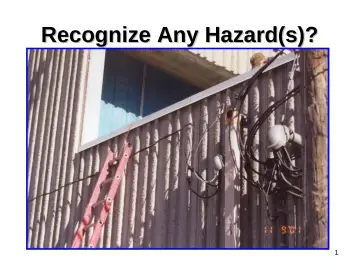
ppt
20 slidesFocus Four: Electrocution Hazard Recognition
OSHA's official Construction Focus Four slide deck on electrocution hazards: overhead lines, contact with energized sources, improper use of cords and tools.
U.S. Department of Labor, OSHAPublic domain
pdf
9 slidesFocus Four: Electrocution Student Handouts
Student handouts including the Focus Four electrocution safety tips, toolbox talks and the Electrical Safety QuickCard.
U.S. Department of Labor, OSHAPublic domain
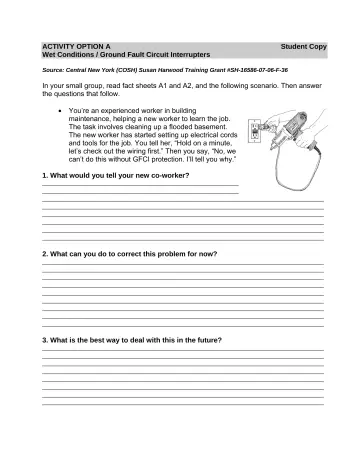
pdf
7 slidesFocus Four: Electrocution Activity Options A and B
Small-group activities for the electrocution module.
U.S. Department of Labor, OSHAPublic domain