Skip to content
Electrical Safety: Common Electrical Work Myths Card (OSHA 4473), page 1: Common Electrical Work Myths
1 / 1

Electrical Safety: Common Electrical Work Myths Card (OSHA 4473)

OSHA card or poster, for General Industry classes.

Page text

· 1 page · by U.S. Department of Labor, OSHA

The words on each page as the author wrote them, read from the file by software so they can be searched. Layout, pictures and tables are not shown here: the pages above and the download are the original.

  1. Page 1

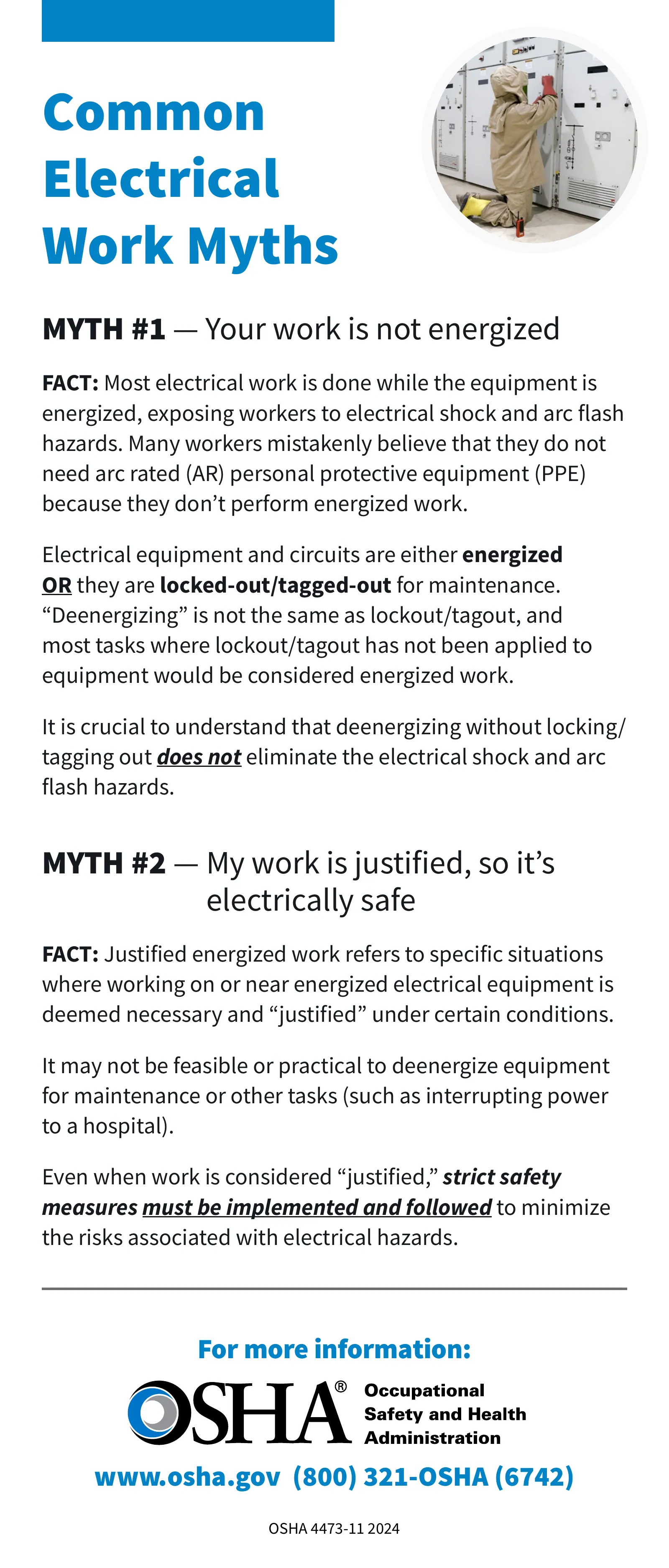
    Common Electrical Work Myths

    • MYTH #1 — Your work is not energized
    • FACT: Most electrical work is done while the equipment is energized, exposing workers to electrical shock and arc flash hazards. Many workers mistakenly believe that they do not need arc rated (AR) personal protective equipment (PPE) because they don’t perform energized work.
    • Electrical equipment and circuits are either energized OR they are locked-out/tagged-out for maintenance. “Deenergizing” is not the same as lockout/tagout, and most tasks where lockout/tagout has not been applied to equipment would be considered energized work.
    • It is crucial to understand that deenergizing without locking/ tagging out does not eliminate the electrical shock and arc flash hazards.
    • MYTH #2 — M
    • y work is justified, so it’s electrically safe
    • FACT: Justified energized work refers to specific situations where working on or near energized electrical equipment is deemed necessary and “justified” under certain conditions.
    • It may not be feasible or practical to deenergize equipment for maintenance or other tasks (such as interrupting power to a hospital).
    • Even when work is considered “justified,” strict safety measures must be implemented and followed to minimize the risks associated with electrical hazards.
    • For more information:
    • www.osha.gov (800) 321-OSHA (6742)
    • OSHA 4473-11 2024

More on Electrical

Esc