One module of a small-business course on preventing electrical injuries. An archived deck: check it against the current standard before teaching from it.
Slide text
· 29 slides · by National Safety Council
The words on each slide as the author wrote them, read from the file by software so they can be searched. Layout, pictures and tables are not shown here: the slides above and the download are the original.
- Slide 1
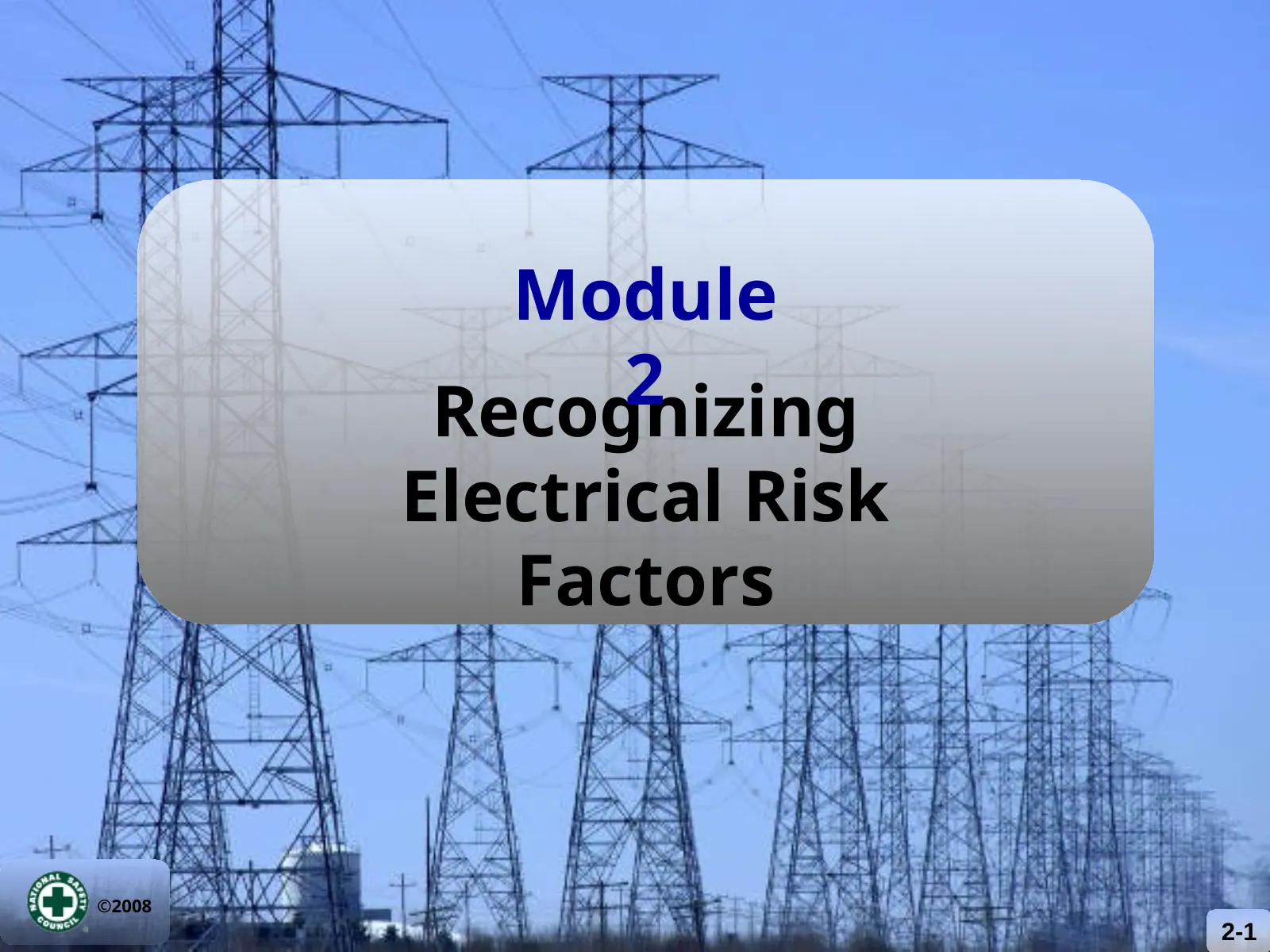
Module
- Recognizing
- Electrical Risk
- Factors
- Slide 2
- Slide 3
Module Objectives
- Define electrical risk factors.
- List and describe electrical risk factors that may contribute to workplace injuries.
- List the most important electrical risk factors to look for in your workplace.
- Slide 4
Module Objectives
- Identify methods for identifying electrical hazards.
- Identify causes of arc blast and the risk factors that contribute to it.
- Presented
- with a problem, describe how to determine risk factors, then list the risk factors.
- Slide 5
Electrical Risk Factor
- An existing or potential condition that, by itself or interacting with other variables, could create an electrical incident that could result in injury, death, property damage or other loss
- Also called electrical hazard
- Slide 6
Four Risk Factor Categories
- Environmen
- Equipment
- Work
- Practices
- Individual
- Slide 7
Environmental Risk
- Factors
- Electrical risks that are in the work environme nt
- Slide 8
Equipment Risk Factors
- Electrical risks in the equipmen t at a worksite
- Slide 9
Work Practices Risk
- Factors
- Electrical risks caused by work requirement s, processes or procedures
- Slide 10
Individual Risk Factors
- Risks that are unique to and caused by the individual
- Slide 11
Identifying Electrical
- Hazards
- Tailgate
- meetings
- and job briefings Checklists
- Job safety analysis Safety inspections OSHA log analysis Incident investigation logs
- Slide 12
Arc Flash
- Luminous electrical discharge (bright, electrical sparking) through the air that occurs when high voltages exist across a gap between conductors
- Slide 13
Arc Blast
- An explosive release of molten materials from equipment caused by high-amperage arcs
- Slide 14
What Happens in an Arc
- 1. Heat builds to 35,000º Blast?
- 2. Copper expands by a factor of 67,000
- 3. Metal melts
- 4. There is intense light
- 5. There are pressure and sound waves
- 6. Shrapnel flies
- Slide 15
Arc Blast
- Slide 16
Consequences of Arc Blast
- Skin burns
- Ignition of clothing Damage of eyesight Hearing loss/ruptured eardrums
- Lung collapse Concussion/loss of memory
- Slide 17
Consequences of Arc Blast— continued
- Shrapnel wounds
- Physical wounds
- Loss of life
- Lost work time
- Loss or damage of equipment
- Slide 18
Did You Know?
- The electrical hazard responsible for 80% of incidents and fatalities is: Electrocution for unqualified workers. Arc flash/blast for qualified workers.
- Slide 19
Where Does Arc Blast Occur?
- Panel boards Switchboards Motors Transformers Motor starters Drive cabinets Fused disconnects
- Slide 20
Causes of Arc Blast
- Proximity to a high-amp source with a conductive object
- Equipment failure from substandard parts Improper installation of equipment or outlets Worn or damaged equipment
- Slide 21
Causes of Arc Blast— continued
- Broken insulation
- A dropped tool that causes a spark
- Dust, corrosion or other impurities on the surface of the conductor
- Accidental contact (by humans or animals) Improper work procedures
- Slide 22
Accidental Contact—
- Example
- Photo courtesy of Schneider Electric
- Slide 23
Accidental Contact—A Better View
- Photo courtesy of Schneider Electric
- Slide 24
Hazardous Tasks
- Removing or installing circuit breakers or fuses
- Working on energized control circuits
- Racking circuit breakers in and out of switch gear Applying safety grounds Removing and replacing panel covers
- Slide 25
Electrical Hazards—Case 1
- Photo courtesy of Schneider Electric
- Slide 26
Electrical Hazards—Case 2
- Photo courtesy of Schneider Electric
- Slide 27
Electrical Hazards—Case 3
- Photo courtesy of Schneider Electric
- Slide 28
Electrical Hazards—Case 4
- Photos courtesy of Schneider Electric
- Slide 29
Planning for Your Small
- Action
- Potential
- Overcoming the
- Business
- Barriers
- Barriers