Skip to content
Trench Safety QuickCard (OSHA 3243), page 1: CARD
1 / 1

Trench Safety QuickCard (OSHA 3243)

Pocket card on trench cave-in protection, a leading caught-in hazard.

Page text

· 1 page · by U.S. Department of Labor, OSHA

The words on each page as the author wrote them, read from the file by software so they can be searched. Layout, pictures and tables are not shown here: the pages above and the download are the original.

  1. Page 1

    CARD

    • QUICK
    • TM
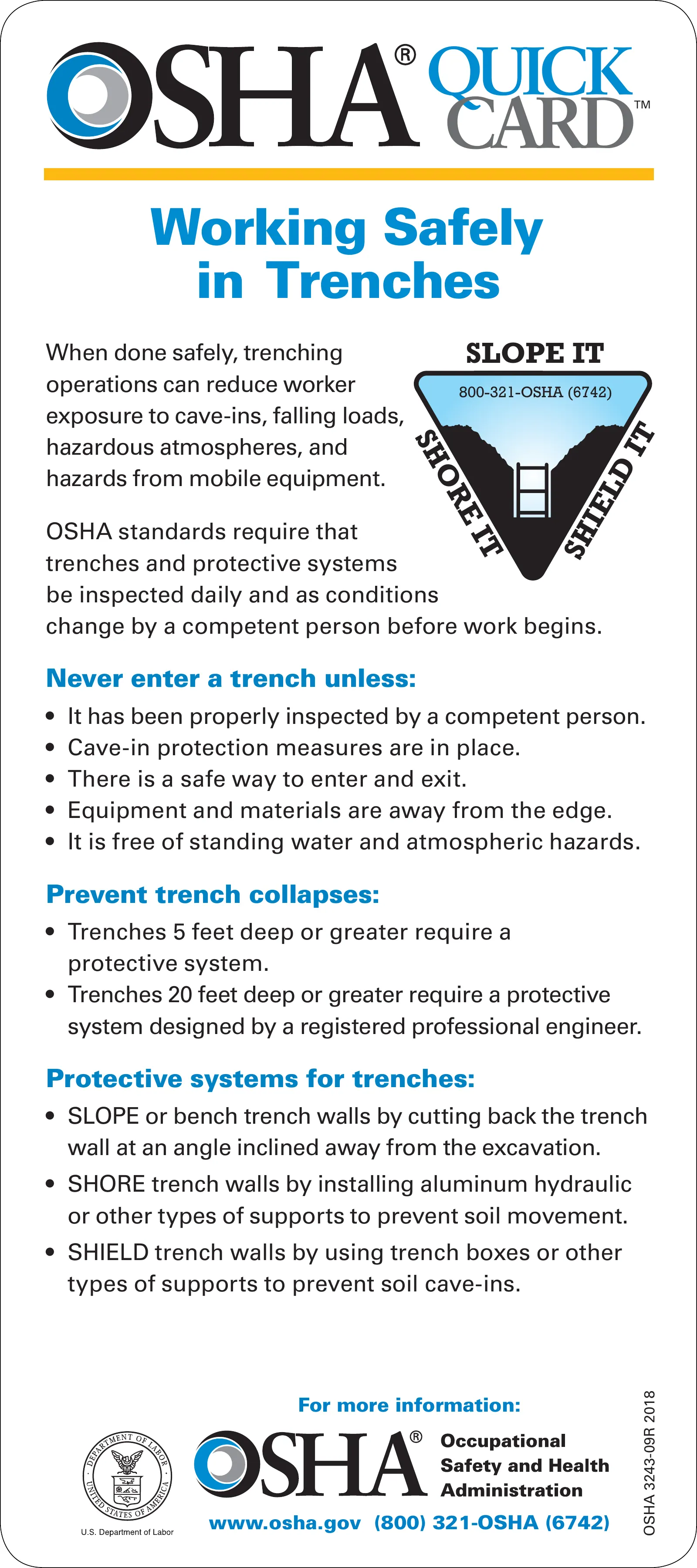
    • Working Safely in Trenches
    • SLOPE IT
    • IE
    • OR
    • LD
    • IT
    • 800-321-OSHA (6742)
    • SH
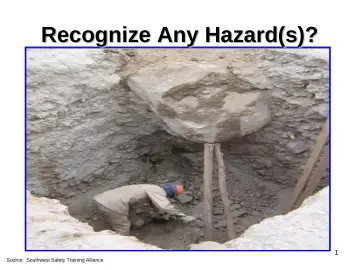
    • When done safely, trenching operations can reduce worker exposure to cave-ins, falling loads, hazardous atmospheres, and hazards from mobile equipment.
    • SH
    • IT
    • OSHA standards require that trenches and protective systems be inspected daily and as conditions change by a competent person before work begins.
    • Never enter a trench unless:
    • It has been properly inspected by a competent person.
    • Cave-in protection measures are in place.
    • There is a safe way to enter and exit.
    • Equipment and materials are away from the edge.
    • It is free of standing water and atmospheric hazards.
    • Prevent trench collapses:
    • Trenches 5 feet deep or greater require a protective system.
    • Trenches 20 feet deep or greater require a protective system designed by a registered professional engineer.
    • Protective systems for trenches:
    • SLOPE or bench trench walls by cutting back the trench wall at an angle inclined away from the excavation.
    • SHORE trench walls by installing aluminum hydraulic or other types of supports to prevent soil movement.
    • For more information:
    • www.osha.gov (800) 321-OSHA (6742)
    • OSHA 3243-09R 2018
    • SHIELD trench walls by using trench boxes or other types of supports to prevent soil cave-ins.

More on Caught-In/Between

Esc