1 / 58Use ← → to flip
Focus Four: Caught-In or -Between Instructor Guide
OSHA instructor guide/lesson plan for the Focus Four caught-in or -between module.
Page text
· 55 of 58 pages · by U.S. Department of Labor, OSHA
The words on each page as the author wrote them, read from the file by software so they can be searched. Layout, pictures and tables are not shown here, and long pages are shortened: the pages above and the download are the original.
- Page 1
Construction Focus Four: Caught‐In or ‐Between Hazards
- OSHA Training Institute
- I NSTRUCTOR G UIDE
- OSHA Directorate of Training and Education
- April 2011
- Page 3
Table of Contents
- Construction Focus Four: Caught-In or -Between Hazards
- TRAINER PREPARATION GUIDANCE … i
- Online Resources … ii Overview … 1 Topic 1: What is a caught-in or -between hazard? … 3
- A. Definition … 3
- B. Examples … 4
- C. Statistics … 6 Topic 2. What are common types of caught-in or -between hazards in construction? … 7
- A. Machinery that has unguarded moving parts … 7
- B. Buried in or by … 9
- C. Pinned between … 10 Topic 3. How can I protect myself from caught-in or -between hazards? … 11
- …
- Page 4
Construction Focus Four: Caught-In or -Between Hazards
- Page ii
- Page 5
Construction Focus Four: Caught-In or -Between Hazards
- TRAINER PREPARATION GUIDANCE
- The “Construction Focus Four: Caught-In or -Between Hazards” lesson is part of the 4-hour block consisting of segments on each of the Focus Four Hazards: Falls, Caught-In or -Between, Struck-By and Electrocution. Because most construction fatalities are caused by fall hazards, falls must be covered for at least one hour, and we recommend at least one hour and 15 minutes. …
- …
- Page 6
Construction Focus Four: Caught-In or -Between Hazards
- Online Resources
- OSHA eTools
- OSHA Construction eTool: http://www.osha.gov/SLTC/etools/construction/index.html
- OSHA Lockout/Tagout eTool: http://www.osha.gov/dts/osta/lototraining/index.html
- OSHA Machine Guarding eTool: http://www.osha.gov/SLTC/etools/machineguarding/index.html
- OSHA Publications
- OSHA 3120 Control of Hazardous Energy (Lockout/Tagout): http://www.osha.gov/Publications/osha3120.pdf
- OSHA 2226 Excavations: http://www.osha.gov/Publications/osha2226.pdf
- …
- Page 7
Construction Focus Four: Caught-In or -Between Hazards
- Overview
- The purpose of this lesson is to provide workers with information that will enable them to recognize common caught-in or -between hazards at construction worksites. This Instructor Guide is intended to be used when presenting the OSHA Training Institute Construction Outreach 10- and 30-hour course. The lesson is comprised of the following four topics:
- 1. What is a caught-in or -between hazard?
- 2. What are the common types of caught-in or -between hazards in construction?
- …
- Page 8
Construction Focus Four: Caught-In or -Between Hazards
- Instruction for this session:
- 1. Ask the class for an example of a hazard on a construction site that could cause a worker to be caught-in or -between objects. Discuss the examples with the class. Be sure that examples of the most common caught-in or -between hazards (caught in machinery; buried in or by; crushed by; pinned between) are covered.
- 2. Discuss “Content” section.
- 3. Show photos of caught-in or -between hazards and have the class identify the caught-in or – between hazards in…
- …
- Page 9
Construction Focus Four: Caught-In or -Between Hazards
- Topic 1: What is a caught-in or -between hazard?
- A. Definition
- B. Examples
- C. Statistics
- NOTES:
- Content for Topic 1:
- The key factor in making a determination between a Caught event and a Struck event is whether the impact of the object alone caused the injury. When the impact alone creates the injury, the event should be recorded as Struck. When the injury is created more as a result of crushing injuries between objects, the event should be recorded as Caught.
- …
- Page 10
Construction Focus Four: Caught-In or -Between Hazards
- B. Examples
- Caught- in or -between hazards in construction cause accidents such as the following:
- A worker was ripping a 6-inch piece of wood on an unguarded compound miter saw. His left thumb was caught in the saw and amputated.
- An employee was performing diagnostic work on a water truck at a construction site. The worker crawled under the operating truck. The employee’s work shirt collar and coveralls became caught on a projecting set screw on the rotating pump shaft. …
- …
- Page 11
Construction Focus Four: Caught-In or -Between Hazards
- Two laborers were framing out footing for foundation walls in an excavation 100-foot long by 45-foot wide by 10-foot deep. The adjacent property along the north wall of the excavation consisted of seven garages, with a 10-foot high cinderblock wall. The cinderblock wall was undermined approximately 2 feet and was not supported. The wall collapsed, crushing the laborers. One was killed and the other was taken to the hospital for back and shoulder injuries.
- …
- Page 12
Construction Focus Four: Caught-In or -Between Hazards
- C. Statistics
- In 2008, the Bureau of Labor Statistics (BLS) reported that the total number of fatal work injuries involving caught-in or –between hazards remained about the same for all of private industry as in 2007. However, the number of such fatalities has increased by approximately 10% since 2003. In 2008, the private construction industry alone accounted for 92 of the caught-in or –between fatalities, or approximately 23% of the total.
- NOTES:
- …
- Page 13
Construction Focus Four: Caught-In or -Between Hazards
- Topic 2. What are the common types of caught-in or -between hazards in construction?
- A. Machinery that has unguarded moving parts causing caught-in or -between incidents
- B. Buried in or by
- C. Pinned between
- NOTES:
- Content for Topic 2
- For additional information on Caught-In Machinery hazards, refer to list of online resources to find:
- Some of the working conditions that contribute to caught in- or –between hazards include: Machinery that has unguarded moving parts or that is not…
- …
- Page 14
Construction Focus Four: Caught-In or -Between Hazards
- Examples of accidents related to machinery or tools that are unguarded; machine parts that are not sufficiently supported, secured or otherwise made safe; and equipment that tips over.
- NOTES:
- Go to: http://www.osha.gov/pls/imis/accidentsearch.html and search by keyword for additional examples
- Classroom Exercise
- Fatal Facts Accident Summary Reports
- Discuss the following accidents and how each could have been prevented.
- A three-man crew was installing an underground
- …
- Page 15
Construction Focus Four: Caught-In or -Between Hazards
- B. Buried in or by
- Major Hazards:
- The major hazard related to buried in or by is cave-ins of unprotected trenches and excavations. Cave-ins crush or suffocate workers. In addition, trenches may contain hazardous atmospheres; workers can drown in water, sewage, or chemicals in the trenches; and if working around underground utilities, workers may also face burns, electrocution or explosions from steam, hot water, gas, or electricity. …
- …
- Page 16
Construction Focus Four: Caught-In or -Between Hazards
- C. Pinned between
- Major Hazards:
- You can be pinned between equipment and a solid object, such as a wall or another piece of equipment; between materials being stacked or stored and a solid object, such as a wall or another piece of equipment; or between shoring and construction materials in a trench. These types of hazards can result in multiple broken bones, asphyxiation, or death.
- Examples of accidents related to pinned between hazards:
- Classroom Exercise
- …
- Page 17
Construction Focus Four: Caught-In or -Between Hazards
- Topic 3. How can I protect myself from caught-in or -between hazards?
- NOTES:
- A. Use Machinery that is Properly Guarded
- B. Use Other Methods to Ensure that Machinery Is Sufficiently Supported, Secured or Otherwise
- Made Safe
- C. Protect Yourself from Being Pinned Between
- Equipment, Materials, or Other Objects
- D. Protect Yourself on Excavation Sites
- E. Training
- CONTENT for Topic 3:
- Never remove a safety guard when a tool is being
- …
- Page 18
Construction Focus Four: Caught-In or -Between Hazards
- C. Protect yourself from being pinned between equipment, materials, or other objects
- Be aware at all times of the equipment around
- you and stay a safe distance from it.
- Never place yourself between moving materials
- and an immovable structure, vehicle, or stacked materials
- Make sure that all loads carried by equipment are
- stable and secured
- Stay out of the swing radius or cranes and other
- equipment.
- Wear a seatbelt, if required, to avoid being
- …
- Page 19
Construction Focus Four: Caught-In or -Between Hazards
- Topic 4. What is my employer required to do to protect workers from caught-in or –between hazards?
- A. Provide guards on power tools and other equipment with moving parts
- B. Support, secure or otherwise make safe equipment having parts that workers could be caught between
- C. Take measures to prevent workers from being crushed by heavy equipment that tips over
- D. Take measures to prevent workers from being pinned between equipment and a solid object
- …
- Page 20
Construction Focus Four: Caught-In or -Between Hazards
- B. Support, secure or otherwise make safe equipment having parts that workers could be caught between
- Your employer should provide a lock-out/tag-out
- program or equivalent system to ensure that equipment is not accidentally energized during maintenance or repair. Lockout/tagout procedures are specifically required for equipment used in concrete and masonry operations.
- Bulldozer and scraper blades, end-loader
- …
- Page 21
Construction Focus Four: Caught-In or -Between Hazards
- D. Take measures to prevent workers from being pinned between equipment and a solid object
- NOTES:
- Employers are required to take measures to prevent workers from being pinned between equipment and a solid object, such as a wall or another piece of equipment; between materials being stacked or stored and a solid object, between shoring and construction materials in a trench.
- Other example situations are:
- During demolition operations, when balling or
- …
- Page 22
Construction Focus Four: Caught-In or -Between Hazards
- NOTES:
- The employer must make sure all excavations
- and trenches 5 feet deep or more, but less than
- 20 feet, are protected by: sloping or benching, trench box or shield, or shoring, and that there are adequate means of access and egress from the excavation.
- If an excavation is more than 20 feet deep, a
- professional engineer must design the system to protect the workers.
- Workers must be protected from equipment or
- materials that could fall or roll into excavations.
- …
- Page 23
Construction Focus Four: Caught-In or -Between Hazards
- F. Provide means to avoid the collapse of structures scaffolds
- NOTES:
- Measures need to be taken by your employer to
- avoid the collapse of other structures, such as scaffolds, that could bury workers underneath them.
- Anytime there is inadequate support, improper construction, or a shift in the components of a scaffold (including the base upon which the structure is built), there is danger of collapse. …
- …
- Page 24
Construction Focus Four: Caught-In or -Between Hazards
- H. Designate a competent person
- OSHA defines a “competent person” as “one who
- is capable of identifying existing and predictable hazards in the surroundings or working conditions which are unsanitary, hazardous, or dangerous to employees, and who has authorization to take prompt corrective measures to eliminate them.”
- Your employer must designate a competent
- person for certain construction activities that may have caught-in or –between hazards:
- Training for scaffold erection
- …
- Page 25
Construction Focus Four: Caught-In or -Between Hazards
- Summary
- During this lesson, you have been given an overview of common caught-in or –between hazards, ways to protect yourself, and what employers must do to protect workers from caught-in or –between hazards.
- NOTES:
- Conduct lesson test
- Distribute student copies and allow time for students to complete the test. When they have finished, provide and discuss the correct answers with the class.
- Instructor answer key and student copies of the lesson test are provided in Appendix A.
- …
- Page 26
Construction Focus Four: Caught-In or -Between Hazards
- References/Sources
- OSHA Website
- BLS Website
- CDC/NIOSH Website
- The Construction Chart Book (CPWR, 2007)
- Central New York COSH, 2007, Construction Safety & Health Caught-in or -between hazards Grantee module, Grant Number SH-16586-07-06-F-36 from OSHA
- CDC/NIOSH in partnership with CPWR-The Center for Construction Research and Training, Hollywood, Health and Society, and the Spanish-language network Telemundo, http://www.cdc.gov/Features/ConstructionFalls/
- Page 27
Construction Focus Four: Caught-In or -Between Hazards
- Page 28
Construction Focus Four: Caught-In or -Between Hazards
- Page 29
APPENDIX A
- Appendix A: Caught-In or -Between Hazards Lesson Test
- Instructor Copy - answers provided separately See file: CaughtIorB_TestwAns_April2011.pdf
- Student copy to distribute follows
- Page B1
- Page 30
APPENDIX A
- Page B2
- Page 31
Construction Focus Four: Caught-In or -Between Hazards Lesson Test
- NAME: ___
- DATE: ___/___/___
- 1. Caught in or -between hazards are related with excavations [trenches]; therefore, the hazard considered to be the greatest risk is:
- a. Cave-ins
- b. Severing of underground utilities
- c. Equipment falling into trenches
- 2. One who is capable of identifying existing and predictable hazards in the surroundings, or working conditions which are unsanitary, hazardous, or dangerous to employees, and who has authorization to take prompt corrective…
- …
- Page 33
APPENDIX B
- Appendix B: Review Exercise
- REVIEW EXERCISE ANSWER SHEET
- Complete the following sentences using words from the word bank.
- WORD BANK
- 1- Safety guard
- 2a- Cave-in
- 7a- Identifying
- 5b- Stacked
- 6- Equipment
- 2b- 5 feet
- 7b- Corrective
- 5a- Immovable
- 4- Secured
- 3- Seatbelt
- Each word will be used once.
- 1. To protect yourself from hazardous moving parts of power tools and equipment, always use a/n Safety guard when using the equipment.
- 2. To avoid being caught in a/n Cave-in, do not work in an unprotected trench that
- 2a
- …
- Page 34
APPENDIX B
- Page B2
- Page 35
REVIEW EXERCISE – STUDENT COPY
- NAME: ___
- DATE: ___/___/___
- Complete the following sentences using words from the word bank.
- WORD BANK
- Safety guard
- Cave-in
- Equipment
- Identifying
- Stacked
- 5 feet
- Corrective
- Secured
- Immovable
- Seatbelt
- Each word will be used once.
- 1. To protect yourself from hazardous moving parts of power tools and equipment, always use a/n ___ when using the equipment.
- 2. To avoid being caught in a/n ___, do not work in an unprotected trench that is ___ deep or more.
- …
- Page 37
APPENDIX C
- Appendix C: Student Handouts
- Contents:
- Fatal Facts Accident Summary #5
- Fatal Facts Accident Summary #13
- Fatal Facts Accident Summary #15
- Fatal Facts Accident Summary #18
- Fatal Facts Accident Summary #22
- Fatal Facts Accident Summary #31
- Fatal Facts Accident Summary #38
- Fatal Facts Accident Summary #50
- Fatal Facts Accident Summary #61
- Fatal Facts Accident Summary #73
- Page C1
- Page 38
APPENDIX C
- Page C2
- Page 39
APPENDIX C
- ACCIDENT SUMMARY No. 5
- Accident Type:
- Weather Conditions: Type of Company:
- Size of Work Crew:
- Union or Non-union:
- Worksite Inspections Conducted
- (1926.20(b)(2)):
- Designated Competent Person on Site
- Employer Safety Health Program:
- Training and Education for Employees
- (1926.21(b)):
- Craft of Deceased Employee(s):
- Age & Sex:
- Time on the Job:
- Time on Task:
- Caught in or Between
- Clear
- Street Paving
- Contractor
- Non-Union
- Yes
- Yes
- Yes Yes
- Ironworker
- 22-Male
- 1 day
- 3 Hours
- BRIEF DESCRIPTION OF ACCIDENT
- …
- Page 40
APPENDIX C
- ACCIDENT SUMMARY No. 13
- Accident Type:
- Weather Conditions:
- Type of Operation:
- Size of Work Crew:
- Collective Bargaining
- Competent Safety Monitor on Site:
- Safety and Health Program in Effect:
- Was the Worksite Inspected
- Regularly:
- Training and Education
- Provided:
- Employee Job Title:
- Age & Sex:
- Experience at this Type of Work:
- Time on Project:
- Collapse of Shoring
- Clear
- Boring and Pipe Jacking
- Excavation
- Yes
- Yes
- No
- Yes
- Yes
- Pipe Welder
- 62-Male
- 18 years
- 2½
- BRIEF DESCRIPTION OF ACCIDENT
- …
- Page 41
APPENDIX C
- ACCIDENT SUMMARY No. 15
- Accident Type:
- Weather Conditions:
- Type of Operation:
- Size of Work Crew:
- Collective Bargaining
- Competent Safety Monitor on Site:
- Safety and Health Program in Effect:
- Was the Worksite Inspected
- Regularly:
- Training and Education Provided:
- Employee Job Title:
- Age & Sex:
- Experience at this Type of Work:
- Time on Project:
- Crushed by Dump Truck
- Body
- Clear, Warm
- General Contractor
- N/A
- Yes
- Yes
- Yes
- Yes
- No
- Truck Driver
- 25-Male
- 2 Months
- 2 Weeks at Site
- BRIEF DESCRIPTION OF ACCIDENT
- …
- Page 42
APPENDIX C
- ACCIDENT SUMMARY No. 18
- Accident Type:
- Weather Conditions:
- Caught by Rotating Part
- Clear
- Telephone Line
- Type of Operation:
- Installation
- Size of Work Crew:
- Collective Bargaining
- No
- Competent Safety Monitor on Site:
- Yes - Victim
- Yes
- Safety and Health Program in
- Effect:
- Was the Worksite Inspected
- Yes
- Regularly:
- Training and Education Provided:
- No
- Boring Machine
- Employee Job Title:
- Operator
- Age & Sex:
- 56-Male
- Experience at this Type of Work:
- 10 Years
- Time on Project:
- 5 Days
- BRIEF DESCRIPTION OF ACCIDENT.
- …
- Page 43
APPENDIX C
- ACCIDENT SUMMARY No. 22
- Accident Type:
- Weather Conditions:
- Type of Operation:
- Size of Work Crew:
- Collective Bargaining
- Competent Safety Monitor on Site:
- Safety and Health Program in Effect:
- Was the Worksite Inspected
- Regularly:
- Training and Education Provided:
- Employee Job Title:
- Age & Sex:
- Experience at this Type of Work:
- Cave-in Warm, Clear
- Excavator
- No
- Yes
- No
- Time on Project:
- 2 Days
- Yes
- No
- Laborer
- 37-Male
- 3 Years
- BRIEF DESCRIPTION OF ACCIDENT
- An employee was installing a small diameter pipe in a trench 3 feet wide, 12-15 feet…
- …
- Page 44
APPENDIX C
- ACCIDENT SUMMARY No. 31
- Accident Type:
- Weather Conditions:
- Type of Operation:
- Size of Work Crew:
- Collective Bargaining
- Competent Safety Monitor on Site:
- Safety and Health Program in Effect:
- Was the Worksite Inspected Regularly:
- Training and Education Provided:
- Employee Job Title:
- Age & Sex:
- Experience at this Type of Work:
- Time on Project:
- Cave-in
- Cloudy and Dry
- Trenching and excavation
- No
- Yes
- Yes
- Yes
- No
- Pipe Layer
- 32-Male
- 9 Months
- 2 Weeks
- BRIEF DESCRIPTION OF ACCIDENT: Employees were laying sewer pipe in a trench 15 feet deep. …
- …
- Page 45
APPENDIX C
- ACCIDENT SUMMARY No. 38
- Accident Type:
- Weather Conditions:
- Type of Operation:
- Size of Work Crew:
- Collective Bargaining
- Competent Safety Monitor on Site:
- Safety and Health Program in Effect:
- Was the Worksite Inspected
- Regularly:
- Training and Education Provided:
- Employee Job Title:
- Age & Sex:
- Experience at this Type of Work:
- Time on Project:
- Caught in or between
- Clear, dry
- Highway, street construction
- Yes
- Yes
- Yes
- Yes
- No
- Equipment Operator
- 38-Male
- 11 Months
- 1 Hour
- BRIEF DESCRIPTION OF ACCIDENT
- …
- Page 46
APPENDIX C
- ACCIDENT SUMMARY No. 50
- Accident Type:
- Weather Conditions:
- Type of Operation:
- Size of Work Crew:
- Collective Bargaining
- Competent Safety
- Monitor on Site:
- Safety and Health
- Program in Effect:
- Was the Worksite
- Inspected Regularly:
- Training and Education
- Provided:
- Employee Job Title:
- Age & Sex:
- Experience at this Type of Work:
- Time on Project:
- Caught between Backhoe
- Superstructure and Concrete Wall
- Clear/Cool
- Excavation Contractor
- Yes
- No
- No
- No
- No
- Truck Driver
- 34-Male
- Unknown
- 4 Days
- …
- Page 47
APPENDIX C
- ACCIDENT SUMMARY No. 61
- Accident Type:
- Trench Collapse
- Weather Conditions:
- Fair
- Type of Operation:
- Excavation Work
- Size of Work Crew:
- Competent Safety Monitor on Site:
- No
- Safety and Health Program in Effect:
- No
- Was the Worksite Inspected Regularly:
- No
- Training and Education Provided:
- Inadequate
- Employee Job Title:
- Laborer
- Age & Sex:
- 51-Male
- Experience at this Type of Work:
- 6 Months
- Time on Project:
- 2 Days
- BRIEF DESCRIPTION OF ACCIDENT
- An employee was working in a trench 4 feet wide and 7 feet deep. …
- …
- Page 48
APPENDIX C
- ACCIDENT SUMMARY No. 73
- Accident Type:
- Weather Conditions:
- Type of Operation:
- Size of Work Crew:
- Competent Person on Site:
- Safety and Health Program in Effect:
- Was the Worksite Inspected Regularly by the Employer:
- Training and Education Provided:
- Employee Job Title:
- Age & Sex:
- Experience at this Type of Work:
- Time on Project:
- Struck by/Caught between
- Clear/warm
- Stacking Structural
- Steel
- No
- No
- No
- No
- Laborer
- 28-Male
- 4 Years
- 5 Weeks
- BRIEF DESCRIPTION OF ACCIDENT
- …
- Page 49
ACCIDENT SUMMARY No. 5
- Accident Type:
- Weather Conditions: Type of Company:
- Size of Work Crew:
- Union or Non-union:
- Worksite Inspections Conducted
- (1926.20(b)(2)):
- Designated Competent Person on Site
- Employer Safety Health Program:
- Training and Education for Employees
- (1926.21(b)):
- Craft of Deceased Employee(s):
- Age & Sex:
- Time on the Job:
- Caught in or Between
- Clear
- Street Paving
- Contractor
- Non-Union
- Yes
- Yes
- Yes Yes
- Ironworker
- 22-Male
- 1 day
- Time on Task:
- 3 Hours
- BRIEF DESCRIPTION OF ACCIDENT
- …
- Page 50
ACCIDENT SUMMARY No. 13
- Accident Type:
- Weather Conditions:
- Type of Operation:
- Size of Work Crew:
- Collective Bargaining
- Competent Safety Monitor on Site:
- Safety and Health Program in Effect:
- Was the Worksite Inspected
- Regularly:
- Training and Education
- Provided:
- Employee Job Title:
- Age & Sex:
- Experience at this Type of Work:
- Time on Project:
- Collapse of Shoring
- Clear
- Boring and Pipe Jacking
- Excavation
- Yes
- Yes
- No
- Yes
- Yes
- Pipe Welder
- 62-Male
- 18 years
- 2½
- BRIEF DESCRIPTION OF ACCIDENT
- …
- Page 51
ACCIDENT SUMMARY No. 15
- Accident Type:
- Weather Conditions:
- Type of Operation:
- Size of Work Crew:
- Collective Bargaining
- Competent Safety Monitor on Site:
- Safety and Health Program in Effect:
- Was the Worksite Inspected
- Regularly:
- Training and Education Provided:
- Employee Job Title:
- Age & Sex:
- Experience at this Type of Work:
- Time on Project:
- Crushed by Dump Truck
- Body
- Clear, Warm
- General Contractor
- N/A
- Yes
- Yes
- Yes
- Yes
- No
- Truck Driver
- 25-Male
- 2 Months
- 2 Weeks at Site
- BRIEF DESCRIPTION OF ACCIDENT
- …
- Page 52
ACCIDENT SUMMARY No. 18
- Accident Type:
- Weather Conditions:
- Caught by Rotating Part
- Clear
- Telephone Line
- Type of Operation:
- Installation
- Size of Work Crew:
- Collective Bargaining
- No
- Competent Safety Monitor on Site:
- Yes - Victim
- Yes
- Safety and Health Program in
- Effect:
- Was the Worksite Inspected
- Yes
- Regularly:
- Training and Education Provided:
- No
- Boring Machine
- Employee Job Title:
- Operator
- Age & Sex:
- 56-Male
- Experience at this Type of Work:
- 10 Years
- Time on Project:
- 5 Days
- BRIEF DESCRIPTION OF ACCIDENT
- …
- Page 53
ACCIDENT SUMMARY No. 22
- Accident Type:
- Weather Conditions:
- Type of Operation:
- Size of Work Crew:
- Collective Bargaining
- Competent Safety Monitor on Site:
- Safety and Health Program in Effect:
- Was the Worksite Inspected
- Regularly:
- Training and Education Provided:
- Employee Job Title:
- Age & Sex:
- Experience at this Type of Work:
- Cave-in Warm, Clear
- Excavator
- No
- Yes
- No
- Time on Project:
- 2 Days
- Yes
- No
- Laborer
- 37-Male
- 3 Years
- BRIEF DESCRIPTION OF ACCIDENT
- An employee was installing a small diameter pipe in a trench 3 feet wide, 12-15 feet deep and 90…
- …
- Page 54
ACCIDENT SUMMARY No. 31
- Accident Type:
- Weather Conditions:
- Type of Operation:
- Size of Work Crew:
- Collective Bargaining
- Competent Safety Monitor on Site:
- Safety and Health Program in Effect:
- Was the Worksite Inspected Regularly:
- Training and Education Provided:
- Employee Job Title:
- Age & Sex:
- Experience at this Type of Work:
- Time on Project:
- Cave-in
- Cloudy and Dry
- Trenching and excavation
- No
- Yes
- Yes
- Yes
- No
- Pipe Layer
- 32-Male
- 9 Months
- 2 Weeks
- BRIEF DESCRIPTION OF ACCIDENT
- …
- Page 55
ACCIDENT SUMMARY No. 38
- Accident Type:
- Weather Conditions:
- Type of Operation:
- Size of Work Crew:
- Collective Bargaining
- Competent Safety Monitor on Site:
- Safety and Health Program in Effect:
- Was the Worksite Inspected
- Regularly:
- Training and Education Provided:
- Employee Job Title:
- Age & Sex:
- Experience at this Type of Work:
- Time on Project:
- Caught in or between
- Clear, dry
- Highway, street construction
- Yes
- Yes
- Yes
- Yes
- No
- Equipment Operator
- 38-Male
- 11 Months
- 1 Hour
- BRIEF DESCRIPTION OF ACCIDENT
- …
- Page 56
ACCIDENT SUMMARY No. 50
- Accident Type:
- Caught between Backhoe
- Superstructure and Concrete Wall
- Clear/Cool
- Excavation Contractor
- Yes
- Weather Conditions:
- Type of Operation:
- Size of Work Crew:
- Collective Bargaining
- Competent Safety
- No
- Monitor on Site:
- Safety and Health
- No
- Program in Effect:
- Was the Worksite
- No
- Inspected Regularly:
- Training and Education
- No
- Provided:
- Employee Job Title:
- Truck Driver
- Age & Sex:
- 34-Male
- Experience at this Type
- Unknown
- of Work:
- Time on Project:
- 4 Days
- …
- Page 57
ACCIDENT SUMMARY No. 61
- Accident Type:
- Trench Collapse
- Weather Conditions:
- Fair
- Type of Operation:
- Excavation Work
- Size of Work Crew:
- Competent Safety Monitor on Site:
- No
- Safety and Health Program in Effect:
- No
- Was the Worksite Inspected Regularly:
- No
- Training and Education Provided:
- Inadequate
- Employee Job Title:
- Laborer
- Age & Sex:
- 51-Male
- Experience at this Type of Work:
- 6 Months
- Time on Project:
- 2 Days
- BRIEF DESCRIPTION OF ACCIDENT
- An employee was working in a trench 4 feet wide and 7 feet deep. About 30 feet away a backhoe was…
- …
- Page 58
ACCIDENT SUMMARY No. 73
- Accident Type:
- Weather Conditions:
- Type of Operation:
- Size of Work Crew:
- Competent Person on Site:
- Safety and Health Program in Effect:
- Was the Worksite Inspected Regularly by the Employer:
- Training and Education Provided:
- Employee Job Title:
- Age & Sex:
- Experience at this Type of Work:
- Time on Project:
- Struck by/Caught between
- Clear/warm
- Stacking Structural
- Steel
- No
- No
- No
- No
- Laborer
- 28-Male
- 4 Years
- 5 Weeks
- BRIEF DESCRIPTION OF ACCIDENT
- Two laborers and a fork lift driver were staking 40-foot-long I-beams in…
- …
More on Caught-In/Between
ppt
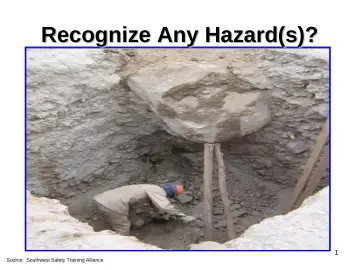
20 slidesFocus Four: Caught-In or -Between Hazard Recognition
OSHA's official Construction Focus Four slide deck on caught-in or -between hazards: trench cave-ins, unguarded machinery, equipment rollovers and pinch points.
U.S. Department of Labor, OSHAPublic domain
ppt
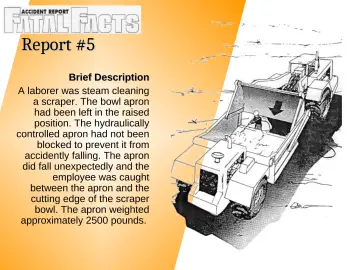
10 slidesFocus Four: Caught-In or -Between Accident Prevention Workshop
Companion workshop deck for the caught-in/between module with accident scenarios for group discussion.
U.S. Department of Labor, OSHAPublic domain
pdf
12 slidesFocus Four: Caught-In or -Between Handouts (Ten Fatal Facts)
Ten Fatal Facts accident summary reports for caught-in/between hazards.
U.S. Department of Labor, OSHAPublic domain