Slips, trips and falls module 2 from Harper College: ladders, stairs and fall protection.
Slide text
· 26 slides · by William Rainey Harper College
The words on each slide as the author wrote them, read from the file by software so they can be searched. Layout, pictures and tables are not shown here: the slides above and the download are the original.
- Slide 1
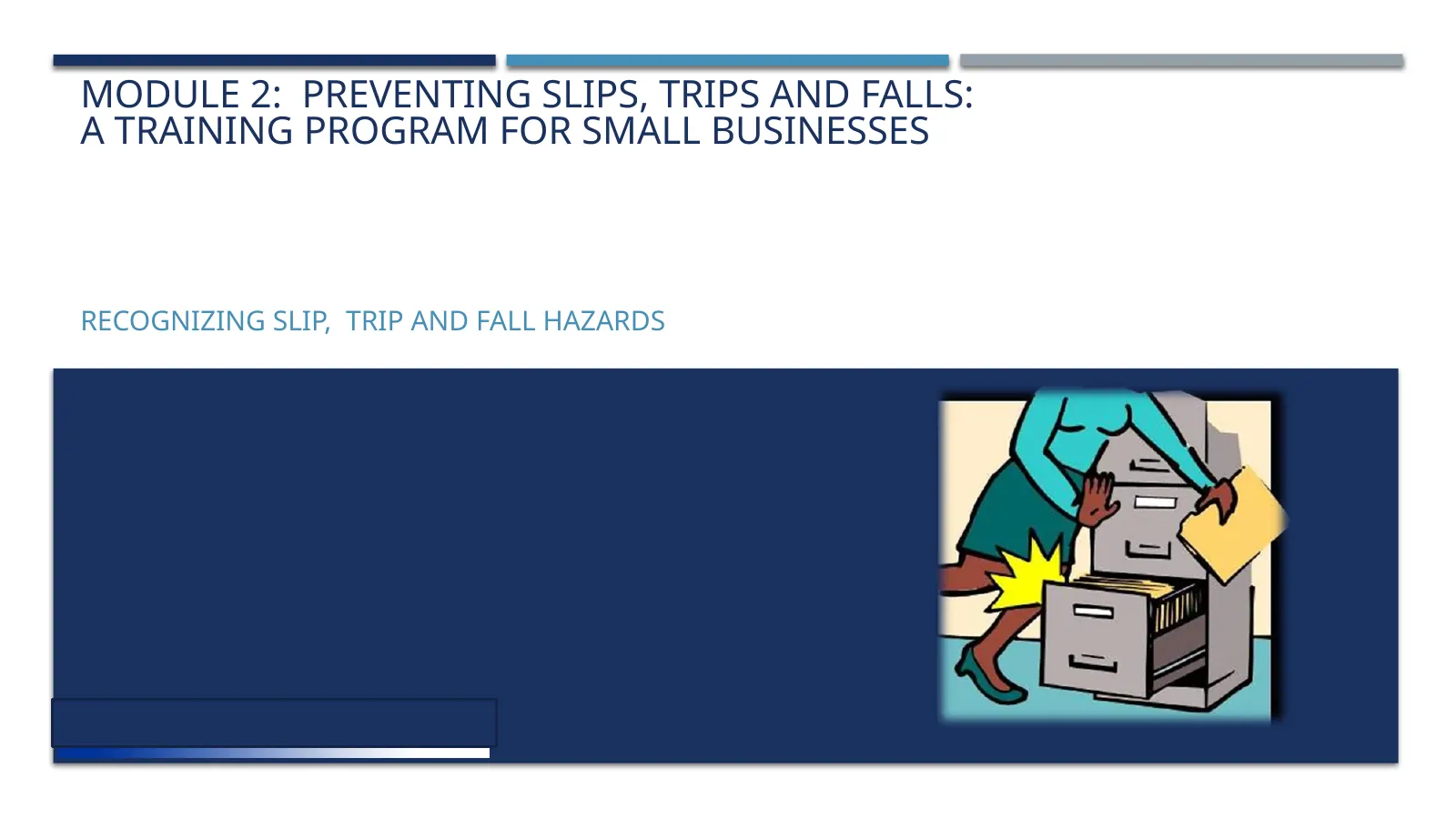
- MODULE 2: PREVENTING SLIPS, TRIPS AND FALLS: A TRAINING PROGRAM FOR SMALL BUSINESSES
- RECOGNIZING SLIP, TRIP AND FALL HAZARDS
- Slide 2
OBJECTIVES
- After completing this module, you will be able to:
- Isolate the four risk factor categories for slips, trips, and falls
- Detect the key areas in an organization that contain slip, trip and fall hazards
- Identify the various tools you can use for identifying slip, trip and fall hazards
- Use a checklist to identify slip, trip and fall hazards at your workplace
- Recognize the slip, trip and fall hazards at your workplace
- Slide 3
REACTIVE OR PROACTIVE
- Reactive
- Responding to incidents when they occur
- Putting out fires
- Taking corrective action after an incident occurs
- Placing blame after an incident
- Fixing symptoms
- Proactive
- Identifying hazards before they cause an incident
- Correcting systems
- Taking corrective action before an incident occurs
- Finding root causes after an incident
- Fixing problems
- Slide 4
FIRST RISK FACTOR CATEGORY - ENVIRONMENT
- Risks in the work environment
- Slide 5
SECOND RISK FACTOR CATEGORY - EQUIPMENT
- Risks inherent in the equipment employees use
- Slide 6
THIRD RISK FACTOR CATEGORY – WORK PRACTICES
- Risks that are caused by work requirements
- Slide 7
FOURTH RISK FACTOR CATEGORY - INDIVIDUAL
- Risks are unique to the individual, including inherent characteristics, habits and behavior
- Slide 8
WHERE DO HAZARDS LURK?
- Slide 9
DISCUSSION OF HAZARDS
- BREAK OUT INTO GROUPS
- ONE PERSON TO WRITE OUT KEY TERMS AND INFORMATION
- Slide 10
RISK FACTORS (1 OF 3)
- Slide 11
RISK FACTORS (2 OF 3)
- Slide 12
RISK FACTORS (3 OF 3)
- Slide 13
WORKPLACE HAZARDS (1 OF 8)
- Slide 14
WORKPLACE HAZARDS (2 OF 8)
- Slide 15
WORKPLACE HAZARDS (3 OF 8)
- Slide 16
WORKPLACE HAZARDS (4 OF 8)
- Slide 17
WORKPLACE HAZARDS (5 OF 8)
- Slide 18
WORKPLACE HAZARDS (6 OF 8)
- Slide 19
WORKPLACE HAZARDS (7 OF 8)
- Slide 20
WORKPLACE HAZARDS (8 OF 8)
- Slide 21
HOW TO USE THE CHECKLIST
- Use the check lists as is. Cross out the items that do not apply to your organization
- Use it as a template/guideline to create a checklist unique to your organization
- Slide 22
ACTION PLAN
- Slide 23
- Slide 24
RECOMMENDED PRACTICES FOR SAFETY AND HEALTH PROGRAMS
- A safe workplace is a sound business osha.gov/shpguidelines/
- to view updated guidelines for Safety and Health Programs
- Slide 25
POST TEST
- Please take a few moments to complete the post test.
- The test is used to evaluate training gained during this course.
- Slide 26
DISCLAIMER
- This material was produced under grant number 46EO-HT10 by the National Safety Council and revised under SH-05064-SH8 from the Occupational Safety and Health administration, U.S. Department of Labor. It does not necessarily reflect the views or policies of the U.S. Department of Labor, nor does mention of trade names, commercial products, or organizations imply endorsement by the U.S. government.