1 / 48Use ← → to flip
Motorized Construction Equipment
Struck-by and run-over hazards around motorized construction equipment, from Western Iowa Tech Community College.
Slide text
· 48 slides · by Western Iowa Technical Community College
The words on each slide as the author wrote them, read from the file by software so they can be searched. Layout, pictures and tables are not shown here: the slides above and the download are the original.
- Slide 1
Motorized Construction
- Equipment
- This material was produced under a grant (SH-27666-SH5) from the Occupational Safety and Health Administration, U.S. Department of Labor. It does not necessarily reflect the views or policies of the U.S. Department of Labor, nor does the mention of trade names, commercial products, or organization imply endorsement by the U.S. Government.
- organization imply endorsement by the U.S. Government.
- Slide 2
Why Are We Conducting This Training?
- In the U.S., more than 800 construction workers die every year while on the job.
- Many of these deaths happen when workers breathe in harmful chemicals.
- Carbon monoxide poisoning is the number one cause of these deaths from breathing in harmful chemicals.
- It is so dangerous because people can't smell, see, or taste it, and it can kill within minutes.
- Slide 3
Learning Objectives
- In This Section You Will Learn:
- Dangers of Carbon Monoxide
- The Identification and use of some Motorized Equipment
- Different hazards associated with Motorized Equipment
- Struck By
- Caught In-between
- Falls
- Electrical
- Workers Rights
- Slide 4
Carbon Monoxide
- Slide 5
What Does All Combustion engines Produce?
- CO- Carbon monoxide is a colorless, odorless, tasteless gas produced by burning gas, wood, propane, charcoal or other fuel. Improperly ventilated appliances and engines, particularly in a tightly sealed or enclosed space, may allow carbon monoxide to accumulate to dangerous levels
- OSHA Permissible Exposure Limit (PEL)-
- Carbon
- 50 ppm
- Monoxide (CO)
- NIOSH Recommended Exposure Limit (REL) –
- Carbon Monoxide- 35 PPM and Ceiling of 200 PPM
- Slide 6
Carbon Monoxide Affects on the Body
- Carbon Monoxide
- Poisoning
- Carbon monoxide poisoning occurs when carbon monoxide builds up in your bloodstream.
- When too much carbon monoxide is in the air, your body replaces the oxygen in your red blood cells with carbon monoxide.
- This can lead to serious tissue damage, or even death.
- Symptoms
- Headaches, dizziness and drowsiness
- Nausea, vomiting, tightness across the chest
- Slide 7
Carbon Monoxide Poisoning
- Show video: https://www.osha.gov/dts/vtools/construction/carbonmonoxide_fnl_eng_web.html
- Slide 8
Avoiding CO (Carbon Monoxide) Poisoning
- Do Not Operate
- Gasoline/Propane/Diesel engine for long periods of time in confined area
- Do not operate a combustion engine without adequate ventilation
- Be careful in cold weather - doors and windows are closed to prevent cold from entering
- Be careful in smaller rooms
- Install CO monitors
- Consider Substituting Gas powered tools for hydraulic or battery operated
- Incorporate a ventilation system
- Keep windows and doors open
- Keep an Air Monitor in the work area
- Slide 9
Some sources of CO on the construction site
- Portable generators/generators in buildings
- Concrete cutting saws, compressors
- Power trowels, floor buffers, space heaters
- Welding, gasoline powered pumps
- High focus on this equipment because of its continued use indoors or in confined areas
- Slide 10
Motorized Equipment
- Slide 11
OSHA’s Focus Four
- All of the following is OSHA’s focus four
- Falls Hazards
- Struck By Hazards
- Caught in- or –between Hazards
- Electrical Hazards
- They are the hazardous areas in construction where the most deaths occur
- Slide 12
Identifying Motorized Construction Equipment
- Mobile Equipment
- Forklifts
- Skid steers
- Aerial Lifts
- Vehicles
- Horizontal Directional Drillers
- Slide 13
Identifying Motorized Construction Equipment
- Hand Power Tools
- Immobile Equipment
- Gas powered cut off Saws
- Portable Generators
- Power washers
- Space Heaters
- Power Trowels
- Welders
- Slide 14
Fire Prevention
- Fire Extinguishers
- Each piece of mobile and immobile equipment should have its own fire extinguisher
- Fire extinguishers should be checked at the beginning of each shift
- Each extinguisher must be fully charged
- Hand power tools must have a fire extinguisher in the near vicinity
- Slide 15
Motorized mobile equipment
- Slide 16
Motorized Mobile Equipment Hazards
- Struck By
- Mobile equipment has many blind spots around it
- Minimize with the use of flaggers and spotters
- Operator training to ensure proper operation of the equipment
- Contact With
- Cranes contact with power lines
- Equipment contact with persons or other equipment
- Slide 17
Gas Powered Mobile Equipment Hazards
- Caught In or between
- Crushed if vehicle overturns
- Death or serious injury likely if
- Employees are caught in-between
- Equipment and Object
- Minimized with the use of Flaggers and Spotters
- Slide 18
Gas Powered Mobile Equipment Hazards
- Fall Protection
- Railings are not always enough when working in elevation
- Use of fall harness & lanyard that is properly inspected, worn & connected is Mandatory in Aerial lifts
- Personal fall arrest systems must be rigged so the employee does not fall more than 6 feet or come in contact with a lower level
- 100% Tie Off
- Inspect before every use
- Slide 19
Motor Powered Equipment
- Electrical Hazards
- Exposed Wires
- Ground Plug Removed
- Ground Fault Circuit Interrupters
- (G.F.C.I.) not Working
- Water
- Severity of shock
- Amount of current flowing through the body (measured in amperes).
- Path of the current through the body.
- Length of time the body is in the circuit.
- Slide 20
Forklifts
- Definition
- Hazards
- Powered industrial trucks, commonly called forklifts or lift trucks, are used in many industries
- Objects falling from Forklift
- Tip-overs
- Structural failures
- primarily to move materials
- Electric shock
- They can also be used to raise, lower, or remove large objects or a number of smaller objects on pallets or in boxes, crates, or other containers
- Entanglement hazards
- Contact with objects
- Contact with ceilings
- Slide 21
Forklifts Continued
- Operation
- Only Trained Authorized persons are allowed to operate a fork lift
- Inspection
- When in operation the operator must be using a seatbelt
- Do not use in confined spaces for long periods of time (Build up of CO)
- Slide 22
Skid Steer
- Operation
- Only Trained Authorized persons are allowed to operate a Skid steer
- Inspection Before Operation
- Seatbelts
- Hazards
- Crushed By Moving Parts
- Rollover Accidents
- Slide 23
Aerial Lifts
- Definition
- An Aerial Lift is any Vehicle
- Mounted Device used to elevate
- Personnel
- Hazards
- Falls from elevated levels
- Objects falling from lifts
- Tip-overs
- Ejection from platform
- Structural failures
- Electric shock
- Entanglement hazards
- Contact with objects
- Contact with ceilings
- Slide 24
Aerial Lifts Continued
- Operation
- Only Trained Authorized persons are allowed to operate an aerial lift
- Inspection before operation
- Operate to Manufacturers
- Specifications
- Fall Protection
- Ensure all railings and gates are in good working condition and closed when in use
- Full body harness attached to the boom or bucket
- Slide 25
Horizontal Directional Drilling
- Operation
- Hazards
- Rotating parts
- Carbon Monoxide
- Unguarded rotating shaft
- Moving parts
- Struck by
- Caught in
- Know the location of drilling and identify any underground hazards before you dig
- Inspection of equipment Certification to operate equipment Operate to manufacturers specification
- Place barriers around equipment to ensure workers are aware of the hazards present
- Ensure any necessary guarding devices are attached and work properly
- Slide 26
Vehicles
- Operation
- Only trained qualified people to operate
- Inspection before each use
- Seatbelts
- Hazards
- Caught in
- Caught between
- Struck by
- Slide 27
Motorized Hand Tools
- Slide 28
Gas Powered Hand Tools Hazards
- Dust/Fumes
- Sharp Flying Objects
- Grinding and cutting operations
- Shields and guards need to be in place and working properly
- Use of PPE – eye/face protection & gloves
- Prevent by maintaining a well ventilated area
- Use of a wet saw
- Use of a dust collector
- Use of dust/particle masks accurate for the job tasks
- In low oxygen environments Self Contained Breathing Apparatus (SCBA) may be necessary
- Use Other PPE – eye/face protection
- Slide 29
Gas Powered Hand Tools
- Personal Protective
- Equipment
- Guards
- Hardhat
- Properly working
- Face Shield
- Not Damaged
- Safety Glasses/ Goggles
- Manufacturer approved
- Dust Mask
- Gloves
- Slide 30
Cut Off Saw Hazards
- Cut Off Saw
- Concrete Saw
- Flying Debris
- Dust
- Carbon Monoxide
- Rotating Parts
- Slide 31
Chain Saws
- Hazards
- Moving Parts
- Dust
- Flying Debris
- Carbon Monoxide
- Unguarded chain
- Kick Back
- The chain saw is one of the most efficient, productive, and dangerous portable power tools used in any industry.
- If you learn to operate it properly and maintain the saw in good working condition, you will avoid injury as well as be more productive.
- Slide 32
Powered Trowels
- Hazards
- Rotating Parts
- Carbon Monoxide
- Flying Debris
- Used for concrete finishing processes
- Slide 33
Pressure Washers
- Figure 47: Workers expose
- Hazards
- Flying Debris
- Fast moving Water
- Carbon Monoxide
- Slip Trip and Fall
- Slide 34
Immobile Motorized
- Equipment
- Slide 35
Immobile Gas Powered Equipment
- Generators
- Ensure located in a well ventilated area
- Properly maintained
- Not operated in water
- Ensure the cords going to the generator are free of nicks in the outer coating
- Hazards
- Electric shock or electrocution
- Carbon monoxide
- Trip hazard from running cords
- Slide 36
Immobile Gas Powered Equipment
- Heaters
- Indirect heat source to ensure exhaust isn’t entering the jobsite
- Proper maintenance to ensure its running correctly
- Ensure no flammable material is around heat source
- Hazards
- Fire hazard
- Shocks and electrocution
- Carbon monoxide
- Slide 37
Immobile Gas Powered Equipment
- Welders
- Hazards
- Avoid any water on the jobsite
- Ensure the proper maintenance of the equipment
- Shocks and electrocution
- Carbon monoxide
- Trip hazard
- Ensure all electrical components are free of nicks or scratches to the outer coating exposing live wires
- Slide 38
Immobile Gas Powered Equipment
- Inspections
- Make Sure equipment is Properly
- Maintained
- Equipment records are maintained
- Lines
- Oil Levels
- Tires
- brakes
- Location
- Keep Away From Workers
- Ensure Exhaust isn’t blown back into building/Work Area
- If Necessary extend lines going to Equipment to ensure adequate distance from work area
- Slide 39
Employee Rights and Responsibilities
- Slide 40
Employee Rights & Responsibilities Occupational Safety and Health Act of 1970
- To assure safe and healthful working conditions for working men and women
- By authorizing enforcement of the standards developed under the Act
- By assisting and encouraging the States in their efforts to assure safe and healthful working conditions
- By providing for research, information, education, and training in the field of occupational safety and health…
- Slide 41
Employee Rights & Responsibilities
- You have the right to:
- A safe and healthful workplace
- Know about hazardous chemicals
- Information about injuries and illnesses in your workplace
- Complain or request hazard correction from employer
- Slide 42
Employee Rights & Responsibilities You have the right to:
- File a confidential complaint with OSHA to have their workplace inspected.
- Receive information and training about hazards, methods to prevent harm, and the OSHA standards that apply to their workplace. The training must be done in a language and vocabulary workers can understand.
- Get copies of their workplace medical and exposure records.
- Participate in an OSHA inspection and speak in private with the inspector.
- Slide 43
Employee Rights & Responsibilities
- Continued:
- File a complaint with OSHA if they have been retaliated or discriminated against by their employer as the result of requesting an inspection or using any of their other rights under the OSH Act.
- File a complaint if punished or discriminated against for acting as a “whistleblower” under the additional 21 federal statutes for which OSHA has jurisdiction.
- Slide 44
Whistleblower Protection
- OSHA's Whistleblower Protection Program enforces the whistleblower provisions of more than twenty whistleblower statutes protecting employees who report violations of various workplace safety
- Airline, commercial motor carrier, consumer product, environmental, financial reform, food safety, health insurance reform, motor vehicle safety, nuclear, pipeline, public transportation agency, railroad, maritime, and securities laws.
- Rights afforded by these whistleblower acts include, but are not limited to, worker participation in safety and health activities, reporting a work related injury, illness or fatality, or reporting a violation of the statutes.
- Slide 45
Whistleblower Protection
- The Whistleblower Protection Advisory Committee (WPAC) was established to advise, consult with, and make recommendations to the Secretary of Labor and the Assistant Secretary of Labor for Occupational Safety and Health on ways to improve the fairness, efficiency, effectiveness, and transparency of OSHA's administration of whistleblower protections.
- In particular, the committee advises OSHA on the development and implementation of improved customer service models, enhancements in the investigative and enforcement process, training, and regulations governing OSHA investigations.
- In addition, WPAC advises OSHA in cooperative activities with other federal agencies that are responsible for areas covered by the whistleblower protection statutes enforced by OSHA.
- Slide 46
Whistleblower Protection
- Protection from discrimination means that an employer cannot retaliate by taking "adverse action" against workers, such as:
- Firing or laying off
- Blacklisting
- Demoting
- Denying overtime or promotion
- Disciplining
- Denial of benefits
- Failure to hire or rehire
- Intimidation
- Making threats
- Reassignment affecting prospects for promotion
- Reducing pay or hours
- Slide 47
Whistleblower Protection
- Slide 48
Employee Rights & Responsibilities
- OSHA website: OSHA Website and OSHA offices: Call or Write (800-321- OSHA)
- Workers Rights: OSHA Publication 3021
- Compliance Assistance Specialists in the area offices
- National Institute for Occupational Safety and Health (NIOSH) – OSHA’s sister agency
- OSHA Training Institute Education Centers
- Doctors, nurses, other health care providers
- Other local, community-based resources
More on Struck-By
ppt
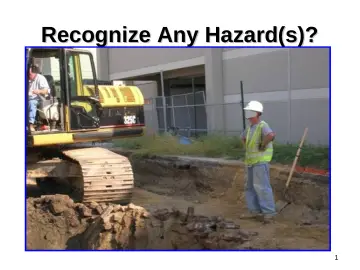
20 slidesFocus Four: Struck-By Hazard Recognition
OSHA's official Construction Focus Four slide deck on struck-by hazards: flying, falling, swinging and rolling objects, vehicles and equipment.
U.S. Department of Labor, OSHAPublic domain
pdf
65 slidesFocus Four: Struck-By Hazards Instructor Guide
OSHA instructor guide/lesson plan for the Focus Four struck-by module.
U.S. Department of Labor, OSHAPublic domain
pdf
7 slidesFocus Four: Struck-By Student Handouts
Student handouts: nail gun safety hazard alert, cranes and rigging focus, PPE for workers checklist.
U.S. Department of Labor, OSHAPublic domain