1 / 2Use ← → to flip
Controlling Silica Dust in Construction: Handheld Power Saws (OSHA 3627)
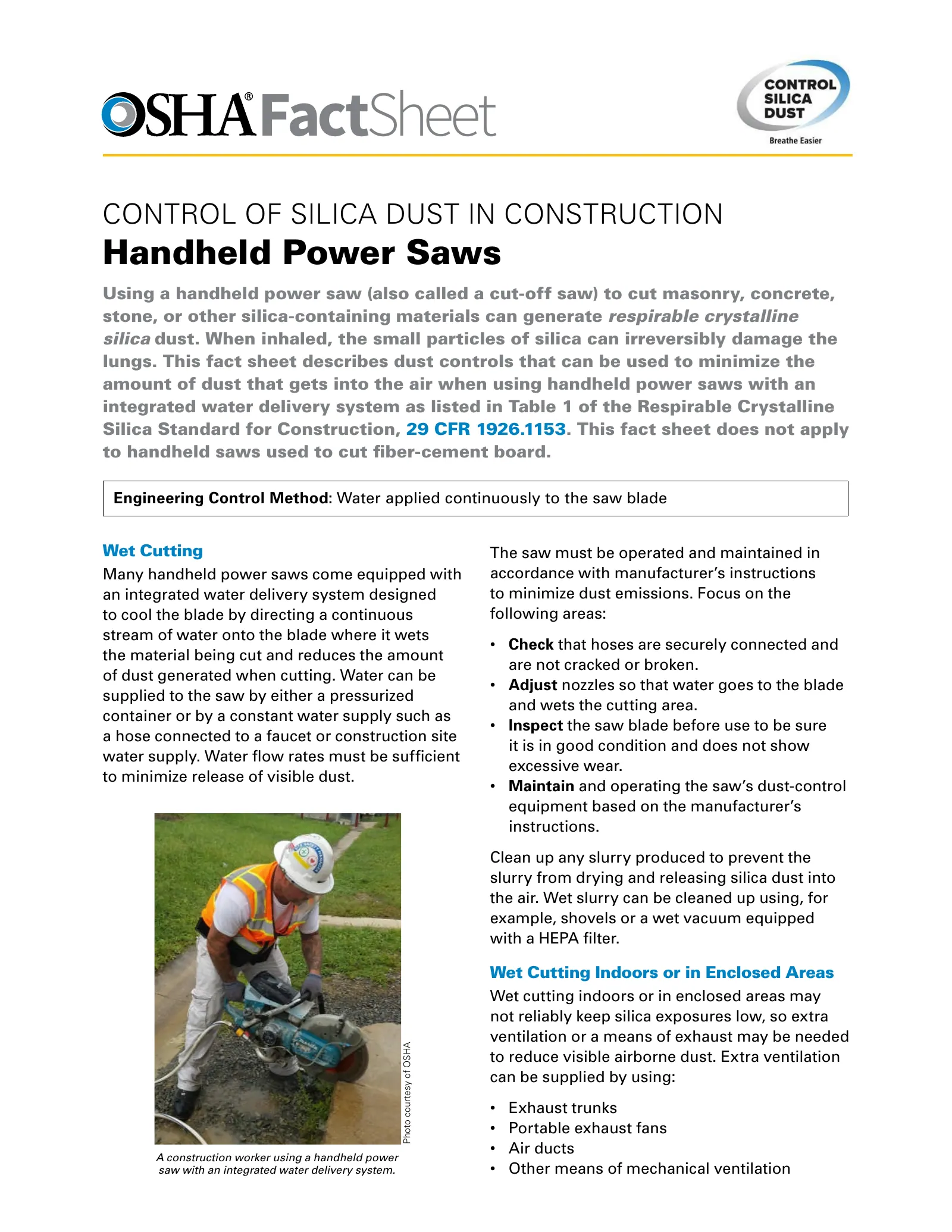
Table 1 task fact sheet for handheld power saws.
Page text
· 2 pages · by U.S. Department of Labor, OSHA
The words on each page as the author wrote them, read from the file by software so they can be searched. Layout, pictures and tables are not shown here: the pages above and the download are the original.
- Page 1
FactSheet
- CONTROL OF SILICA DUST IN CONSTRUCTION
- Handheld Power Saws
- Using a handheld power saw (also called a cut-off saw) to cut masonry, concrete, stone, or other silica-containing materials can generate respirable crystalline silica dust. When inhaled, the small particles of silica can irreversibly damage the lungs. This fact sheet describes dust controls that can be used to minimize the amount of dust that gets into the air when using handheld power saws with an integrated water delivery system as listed in Table 1 of the Respirable Crystalline Silica Standard for Construction, 29 CFR 1926.1153. This fact sheet does not apply to handheld saws used to cut fiber-cement board.
- Engineering Control Method: Water applied continuously to the saw blade
- Wet Cutting
- Many handheld power saws come equipped with an integrated water delivery system designed to cool the blade by directing a continuous stream of water onto the blade where it wets the material being cut and reduces the amount of dust generated when cutting. Water can be supplied to the saw by either a pressurized container or by a constant water supply such as a hose connected to a faucet or construction site water supply. Water flow rates must be sufficient to minimize release of visible dust.
- The saw must be operated and maintained in accordance with manufacturer’s instructions to minimize dust emissions. Focus on the following areas:
- Check that hoses are securely connected and are not cracked or broken.
- Adjust nozzles so that water goes to the blade and wets the cutting area.
- Inspect the saw blade before use to be sure it is in good condition and does not show excessive wear.
- Maintain and operating the saw’s dust-control equipment based on the manufacturer’s instructions.
- Photo courtesy of OSHA
- Clean up any slurry produced to prevent the slurry from drying and releasing silica dust into the air. Wet slurry can be cleaned up using, for example, shovels or a wet vacuum equipped with a HEPA filter.
- A construction worker using a handheld power saw with an integrated water delivery system.
- Wet Cutting Indoors or in Enclosed Areas Wet cutting indoors or in enclosed areas may not reliably keep silica exposures low, so extra ventilation or a means of exhaust may be needed to reduce visible airborne dust. Extra ventilation can be supplied by using:
- Exhaust trunks
- Portable exhaust fans
- Air ducts
- Other means of mechanical ventilation
- Page 2
- Ensure air flow is not impeded by the movements of employees during work, or by the opening or closing of doors and windows.
- Position the ventilation to move contaminated air away from the workers’ breathing zones.
- Electrical Safety. Where water is used to control dust, electrical safety is a particular concern. Use ground-fault circuit interrupters (GFCIs) and watertight, sealable electrical connectors for electric tools and equipment on construction sites.
- Respiratory Protection
- In addition to using wet cutting methods, respiratory protection with a minimum
- Assigned Protection Factor (APF) of 10 is required on Table 1 when wet cutting with handheld masonry saws indoors or in an enclosed area, or used outdoors for more than four hours per shift.
- When respirators are required, employers must put in place a written respiratory protection program in accordance with OSHA’s Respiratory Protection standard 29 CFR 1910.134.
- Additional Information
- For more information, visit www.osha.gov/silica and see the OSHA Fact Sheet on the Crystalline Silica Rule for Construction, and the Small Entity Compliance Guide for the Respirable Crystalline Silica Standard for Construction.
- OSHA can provide compliance assistance through a variety of programs, including technical assistance about effective safety and health programs, workplace consultations, and training and education. OSHA’s On-Site Consultation Program offers free, confidential occupational safety and health services to small and medium-sized businesses in all states and several territories across the country, with priority given to high-hazard worksites. On‑Site consultation services are separate from enforcement and do not result in penalties or citations. To locate the OSHA On‑Site Consultation Program nearest you, visit www.osha.gov/consultation.
- Workers’ Rights
- Workers have the right to:
- Working conditions that do not pose a risk of serious harm.
- Receive information and training (in a language and vocabulary the worker understands) about workplace hazards, methods to prevent them, and the OSHA standards that apply to their workplace.
- Review records of work-related injuries and illnesses.
- File a complaint asking OSHA to inspect their workplace if they believe there is a serious hazard or that their employer is not following OSHA’s rules. OSHA will keep all identities confidential.
- Exercise their rights under the law without retaliation, including reporting an injury or raising health and safety concerns with their employer or OSHA. If a worker has been retaliated against for using their rights, they must file a complaint with OSHA as soon as possible, but no later than 30 days.
- For additional information, see OSHA’s Workers page.
- How to Contact OSHA
- Under the Occupational Safety and Health Act of 1970, employers are responsible for providing safe and healthful workplaces for their employees. OSHA’s role is to ensure these conditions for America’s working men and women by setting and enforcing standards, and providing training, education and assistance. For more information, visit www.osha.gov or call OSHA at 1-800-321- OSHA (6742), TTY 1-877-889-5627.
- This is one in a series of informational fact sheets highlighting OSHA programs, policies or standards. It does not impose any new compliance requirements. For a comprehensive list of compliance requirements of OSHA standards or regulations, refer to Title 29 of the Code of Federal Regulations. This information will be made available to sensory-impaired individuals upon request. The voice phone is (202) 693-1999; teletypewriter (TTY) number: (877) 889-5627.
- DSG FS-3627 12/2017
More on Silica
pptx
85 slidesSilica Hazards in Construction
Silica hazards and the construction silica standard (Table 1 controls) from the Chicagoland Construction Safety Council.
Chicagoland Construction Safety CouncilOSHA Harwood grant
pptxes
76 slidesPeligros de Sílice en la Construcción
Spanish edition of the Chicagoland Construction Safety Council silica deck.
Chicagoland Construction Safety CouncilOSHA Harwood grant
pptx
86 slidesSilica Training
Respirable crystalline silica training for construction from Wayne State University.
Wayne State UniversityOSHA Harwood grant