1 / 31Use ← → to flip
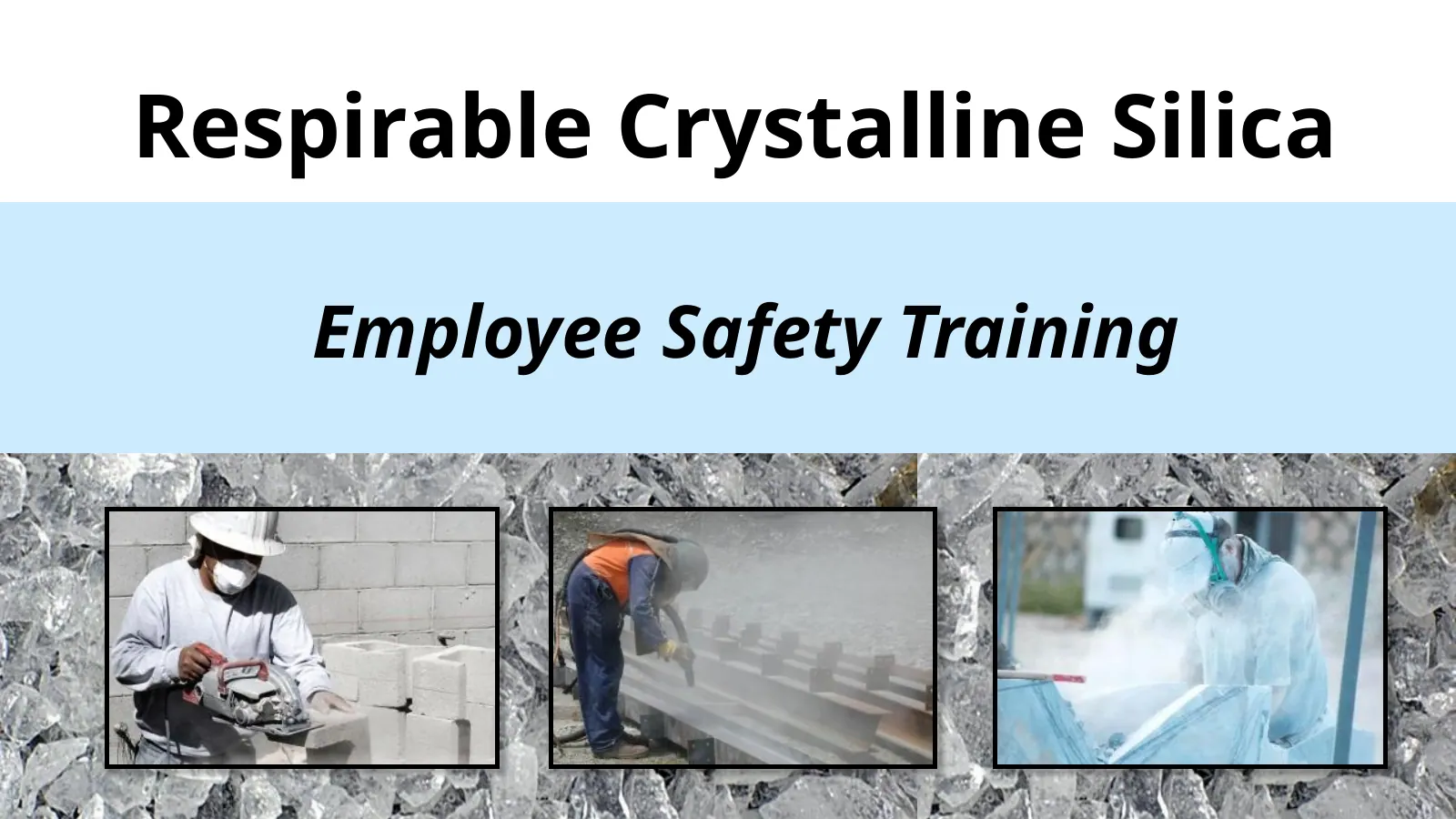
Respirable Crystalline Silica Employee Safety Training
Compact silica employee training from Mississippi State University; fits a 30-minute block.
Slide text
· 31 slides · by Mississippi State University
The words on each slide as the author wrote them, read from the file by software so they can be searched. Layout, pictures and tables are not shown here: the slides above and the download are the original.
- Slide 1
Respirable Crystalline Silica
- Employee Safety Training
- Slide 2
Disclaimer
- This material was produced under grant number SH05047SH8 from the Occupational Safety and Health Administration, U.S. Department of Labor. It does not necessarily reflect the views or policies of the U.S. Department of Labor, nor does mention of trade names, commercial products, or organizations imply endorsement by the U.S. Government.
- Slide 3
Trainee Learning Objectives
- By the end of the training session, each trainee will be able to:
- 1. Identify silica hazards in their workplace
- 2. Describe controls to reduce silica exposure
- 3. Understand the OSHA requirements for silica safety
- 4. Identify specific steps they can take to reduce their exposure to silica hazards at their job
- Slide 4
Course Roadmap
- Section 1: Why Silica is Hazardous
- Section 2: Controlling Exposure to Silica
- Section 3: Employer Requirements & OSHA Silica Standard
- Section 4: Summary and Practical Steps
- Slide 5
Why Silica is Hazardous
- Slide 6
About Silica
- Crystalline silica is a mineral found in many materials
- Slide 7
Silica in Industrial Processes
- Industrial processes on these materials can cause workers to be exposed to small silica dust particles
- Cutting, sawing, grinding, sanding, crushing, and drilling
- Slide 8
The Hazards of Silica
- Small dust particles = respirable crystalline silica
- Small enough to travel into a worker’s lungs!
- These particles are at least 100 times smaller than ordinary sand!
- Slide 9
Is Exposure Hazardous?
- Is exposure to crystalline silica hazardous? It depends on various factors:
- Route of exposure
- Toxicity
- Dose and duration
- Interaction
- Individual characteristics
- Slide 10
Possible Health Effects
- Once respirable crystalline silica reaches a worker’s lungs, it can cause:
- Silicosis – an incurable lung disease that can lead to disability and death
- Lung cancer
- COPD – chronic obstructive pulmonary disease
- Kidney disease
- Slide 11
Common Work Tasks and Industries where Silica Hazards Exist
- Manufacturing
- Glass, pottery, ceramic, brick, concrete, asphalt roofing, jewelry, artificial stone, dental, porcelain, or structural clay products
- Industrial sand
- Use of industrial sand in operations such as foundry work and hydraulic fracturing
- Use of industrial sand for abrasive blasting
- Slide 12
Activity #1
- Small Group Discussion
- Think/Pair/Share
- Slide 13
Controlling Exposure to Silica
- Slide 14
Types of Controls
- The hazards related to crystalline silica can be controlled using a variety of techniques. The types of controls include Elimination, Substitution, Engineering and Administrative controls, and PPE.
- Slide 15
Engineering Control Methods
- Wet methods:
- Apply water where silica dust is made
- Local exhaust ventilation: Removes silica dust at or near the point where the dust is made
- Enclosures:
- Isolate the work process or the worker
- Slide 16
Administrative Control Methods
- Housekeeping
- Work schedules &
- Job rotation
- Inspections and job hazard analysis
- Slide 17
Personal Protective Equipment
- Only engineering and administrative controls are not enough
- Employers must provide appropriate respirators, and comply with requirements of the silica standard and the OSHA respiratory protection standard (29 CFR 1910.134)
- Slide 18
Activity #2
- Video Case Study
- Link to Video
- Slide 19
Employer Requirements
- OSHA Silica Standard
- Slide 20
OSHA Silica Standard: 29 CFR 1926.1153
- Provides silica safety requirements for employers
- Slide 21
Employer Requirements
- Determine the amount of silica that workers are exposed to
- Action level = 25 μg/m 3 , averaged over an 8-hour day
- Provide worker protection when respirable crystalline silica exposure is above the permissible exposure limit
- Permissible exposure limit = 50 μg/m 3 , averaged over an 8-hour day
- Slide 22
Additional Employer Requirements
- Limit access to areas with respirable crystalline silica
- Use dust control and safer work methods
- Provide respirators when other controls cannot limit exposure
- Provide a written exposure control plan
- Restrict housekeeping practices that expose workers to silica
- Offer medical exams (chest x-rays and lung function tests) every thee years to workers exposed at or above the action level for 30+ days per year
- Train workers on silica exposure
- Keep records of exposure and medical exams
- Slide 23
Employee’s Role
- Use equipment and controls properly
- Be aware
- Participate in training, exposure monitoring, and screening programs
- Don’t bring dust home
- Don’t eat, drink, smoke, or apply cosmetics while near silica dust
- Wash hands and face outside of dusty areas
- Slide 24
Activity #3
- Action Plan
- Slide 25
Wrap Up
- Slide 26
Learning Objective 1 Review & Summary
- 1. Identify silica hazards in their workplace
- Crystalline silica is a mineral found in many materials: Stone, Rock, Concrete, Brick, Block, Mortar
- Industrial processes (cutting, sawing, grinding, sanding, crushing, drilling) on these materials can cause workers to be exposed to small silica dust particles
- Slide 27
Learning Objective 2 Review & Summary
- 2. Describe controls to reduce silica exposure
- Engineering Controls
- Administrative Controls
- Personal Protective Equipment
- Slide 28
Learning Objective 3 Review & Summary
- 3. Understand the OSHA requirements for silica safety
- Some of the requirements of OSHA’s Silica Standard are:
- Measure and monitor silica exposure
- Provide worker protection when necessary
- Train workers
- Keep records
- Slide 29
Learning Objective 4 Review & Summary
- 4. Identify specific steps they can take to reduce their exposure to silica hazards at their job
- Use equipment and controls properly
- Be aware
- Participate in training, exposure monitoring, and screening programs
- Don’t bring dust home
- Don’t eat, drink, smoke, or apply cosmetics while near silica dust
- Wash hands and face outside of dusty areas
- Slide 30
Stop Silicosis Video
- https://www.youtube.com/watch?v=HAByIIzQSuU.
- Slide 31
End of Training
More on Silica
pptx
85 slidesSilica Hazards in Construction
Silica hazards and the construction silica standard (Table 1 controls) from the Chicagoland Construction Safety Council.
Chicagoland Construction Safety CouncilOSHA Harwood grant

pptxes
76 slidesPeligros de Sílice en la Construcción
Spanish edition of the Chicagoland Construction Safety Council silica deck.
Chicagoland Construction Safety CouncilOSHA Harwood grant
pptx
86 slidesSilica Training
Respirable crystalline silica training for construction from Wayne State University.
Wayne State UniversityOSHA Harwood grant