1 / 4Use ← → to flip
Heat Illness Prevention: Working in the Heat: Know the Hazards Brochure (OSHA 4401)
OSHA fact sheet or bulletin, for General Industry classes.
Page text
· 4 pages · by U.S. Department of Labor, OSHA
The words on each page as the author wrote them, read from the file by software so they can be searched. Layout, pictures and tables are not shown here: the pages above and the download are the original.
- Page 1
OSHA 4401-02 2024
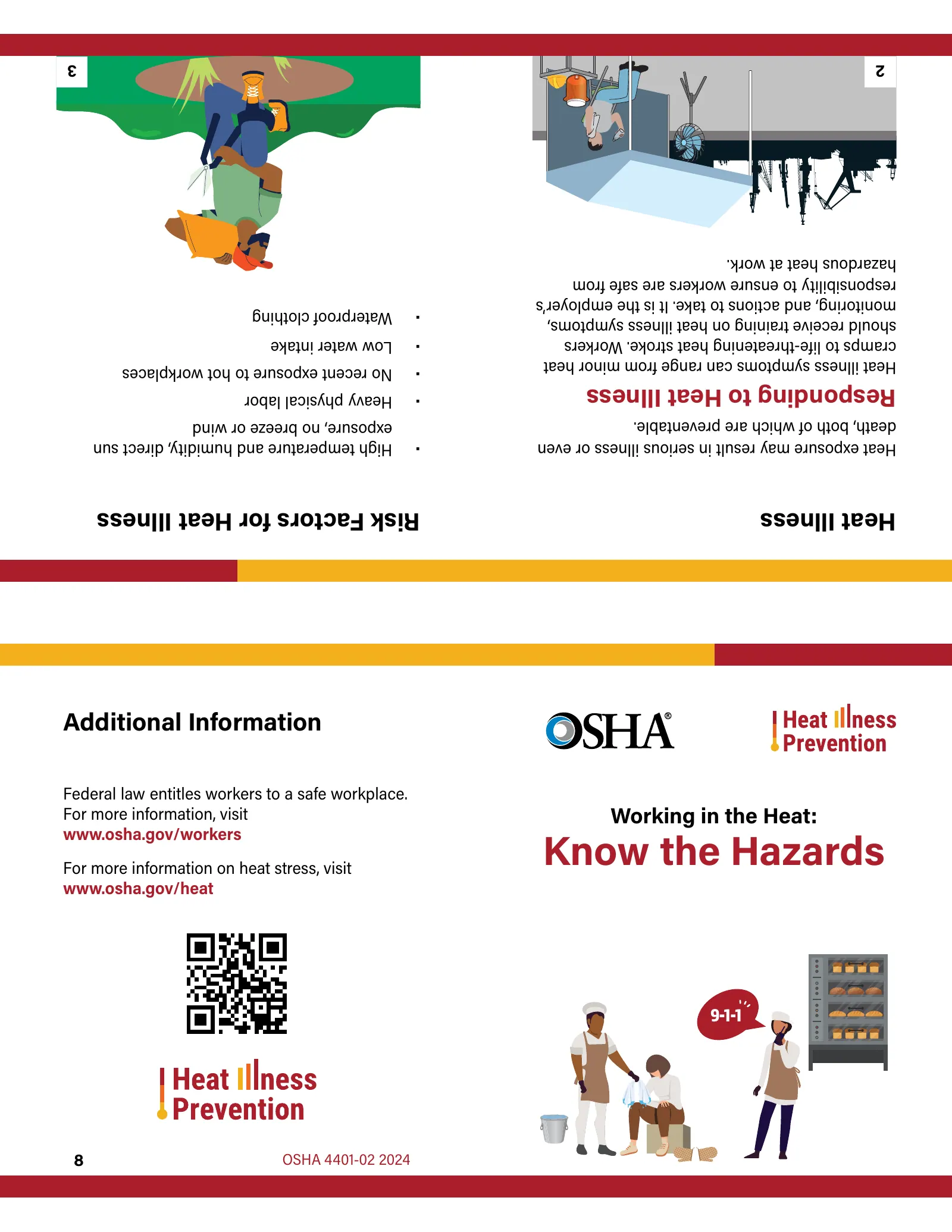
- 9-1-1
- For more information on heat stress, visit www.osha.gov/heat
- Federal law entitles workers to a safe workplace.
- For more information, visit www.osha.gov/workers
- Know the Hazards
- Working in the Heat:
- Additional Information
- Heat Illness
- Risk Factors for Heat Illness
- Responding to Heat Illness
- Page 2
Know the Hazards
- OSHA 4401-02 2024
- 9-1-1
- For more information on heat stress, visit www.osha.gov/heat
- Federal law entitles workers to a safe workplace.
- For more information, visit www.osha.gov/workers
- Working in the Heat:
- Additional Information
- Heat Illness
- Risk Factors for Heat Illness
- Responding to Heat Illness
- Page 3
Signs of Heat-Related Emergencies
- Be Alert for Signs of Heat
- Illness
- Heat illness can be fatal if not treated quickly.
- The symptoms of heat illness will intensify with time if actions are not taken to hydrate, rest, and cool down. Take action to avoid a medical emergency.
- If a worker experiences:
- Abnormal thinking or behavior Slurred speech
- Seizures
- Fainting
- Heavy sweating or hot, dry skin
- Take these actions immediately:
- Call 911 immediately.
- Cool the worker right away with water or ice.
- Remove unnecessary clothing and give cool water to drink. Stay with the worker until help arrives.
- Topics to Include in a Heat Illness Prevention Program
- Have a prevention plan and designate someone to oversee the program.
- Provide regular training on heat illness.
- Acclimatize workers and modify work schedules to reduce heat exposure.
- Allow frequent rest breaks.
- Identify heat hazards and check the temperature in the space before work.
- Monitor for heat illness symptoms.
- Designate a break area and encourage hydration.
- Have workers dress for the heat.
- Be prepared for an emergency.
- Symptoms of heat illness can include:
- Headache or nausea
- Weakness or dizziness
- Elevated body temperature
- Thirst
- Decreased urine output
- First aid for heat illness:
- Give cool water to drink.
- Remove unnecessary clothing.
- Move to a cooler area.
- Cool with water, ice, or a fan.
- Do not leave alone.
- Seek medical care if needed.
- Control Heat in the Workplace
- Assess which controls may be appropriate for your workplace. These could include air conditioning, adding fans to increase air circulation, and insulating hot surfaces. As a reminder, certain personal protective equipment can increase the risk of heat illness. Frequently communicate with workers to ensure they are not experiencing symptoms of heat illness.
- Page 4
Signs of Heat-Related Emergencies
- Be Alert for Signs of Heat
- Illness
- Heat illness can be fatal if not treated quickly.
- The symptoms of heat illness will intensify with time if actions are not taken to hydrate, rest, and cool down. Take action to avoid a medical emergency.
- If a worker experiences:
- Abnormal thinking or behavior Slurred speech
- Seizures
- Fainting
- Heavy sweating or hot, dry skin
- Take these actions immediately:
- Call 911 immediately.
- Cool the worker right away with water or ice.
- Remove unnecessary clothing and give cool water to drink. Stay with the worker until help arrives.
- Topics to Include in a Heat Illness Prevention Program
- Have a prevention plan and designate someone to oversee the program.
- Provide regular training on heat illness.
- Acclimatize workers and modify work schedules to reduce heat exposure.
- Allow frequent rest breaks.
- Identify heat hazards and check the temperature in the space before work.
- Monitor for heat illness symptoms.
- Designate a break area and encourage hydration.
- Have workers dress for the heat.
- Be prepared for an emergency.
- Symptoms of heat illness can include:
- Headache or nausea
- Weakness or dizziness
- Elevated body temperature
- Thirst
- Decreased urine output
- First aid for heat illness:
- Give cool water to drink.
- Remove unnecessary clothing.
- Move to a cooler area.
- Cool with water, ice, or a fan.
- Do not leave alone.
- Seek medical care if needed.
- Control Heat in the Workplace
- Assess which controls may be appropriate for your workplace. These could include air conditioning, adding fans to increase air circulation, and insulating hot surfaces. As a reminder, certain personal protective equipment can increase the risk of heat illness. Frequently communicate with workers to ensure they are not experiencing symptoms of heat illness.
More on Heat
pdf
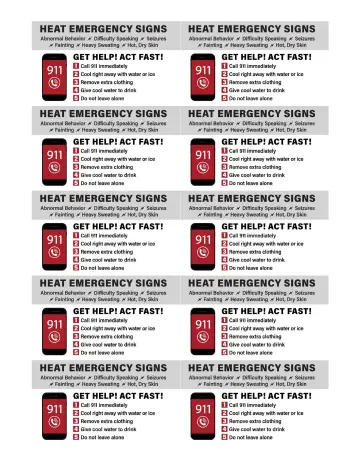
2 slidesHeat Emergency Wallet Card (OSHA 4403)
OSHA card or poster, for General Industry classes.
U.S. Department of Labor, OSHAPublic domain
pdfes
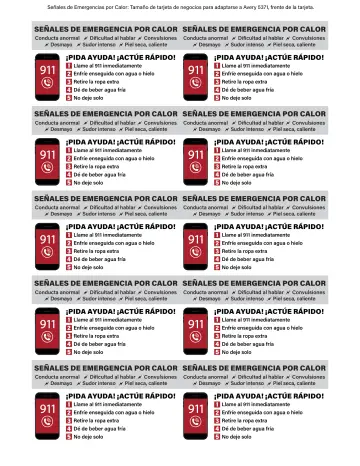
2 slidesHeat Emergency Wallet Card (OSHA 4404) (en español)
OSHA card or poster, in Spanish, for General Industry classes.
U.S. Department of Labor, OSHAPublic domain
pdf
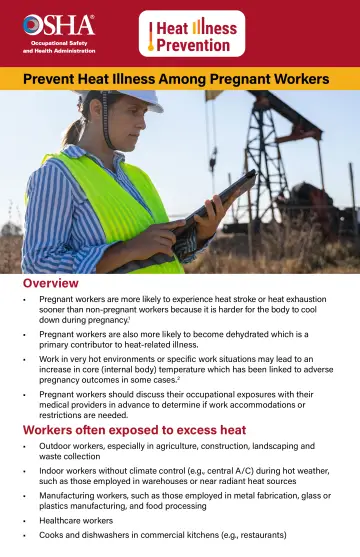
4 slidesHeat Illness Prevention: Prevent Heat Illness Among Pregnant Workers Fact Sheet (OSHA 4376)
OSHA fact sheet or bulletin, for General Industry classes.
U.S. Department of Labor, OSHAPublic domain