OSHA fact sheet or bulletin, for General Industry classes.
Page text
· 4 pages · by U.S. Department of Labor, OSHA
The words on each page as the author wrote them, read from the file by software so they can be searched. Layout, pictures and tables are not shown here: the pages above and the download are the original.
- Page 1
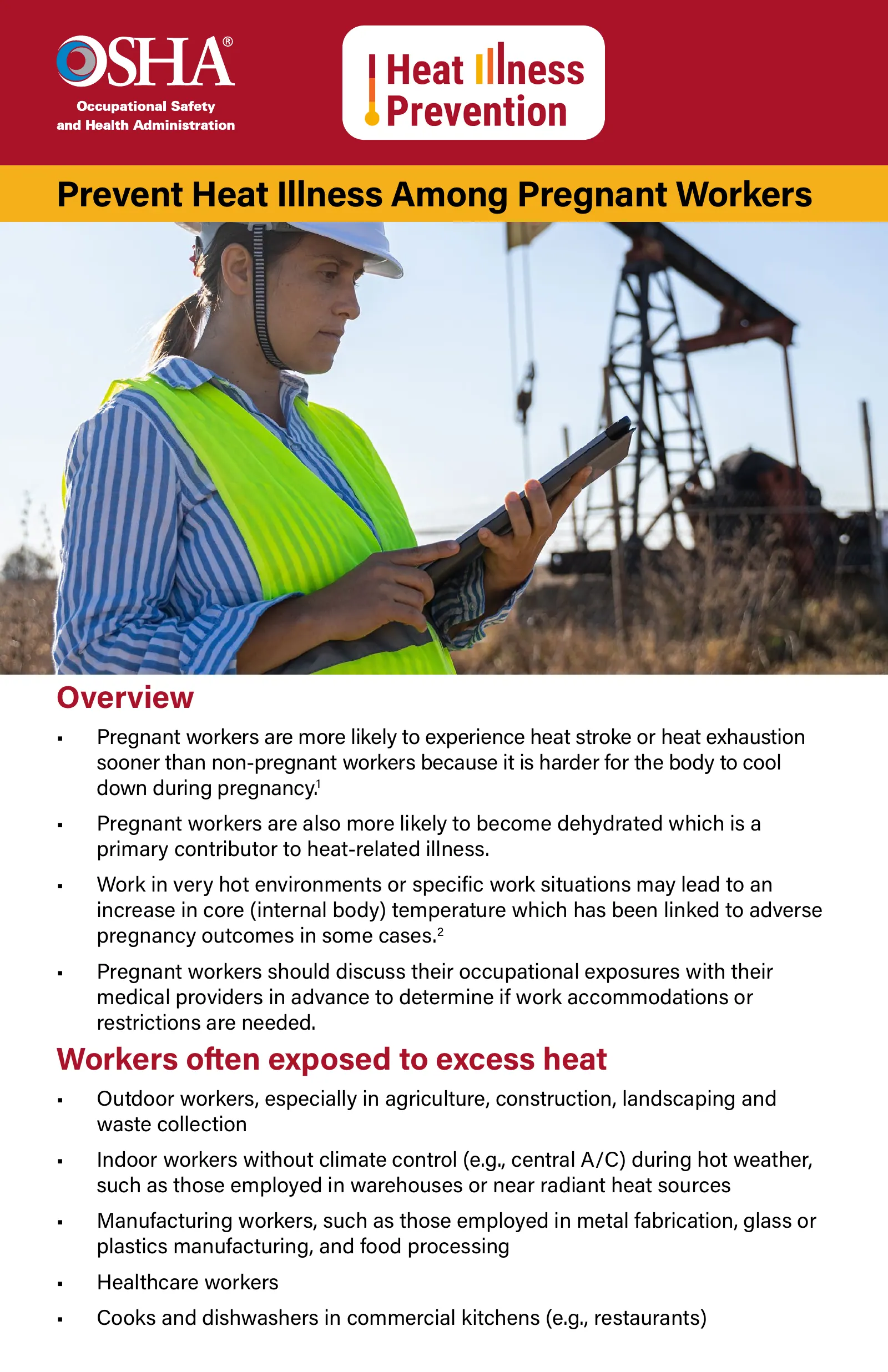
Prevent Heat Illness Among Pregnant Workers
- Overview
- Pregnant workers are more likely to experience heat stroke or heat exhaustion sooner than non-pregnant workers because it is harder for the body to cool down during pregnancy. 1
- Pregnant workers are also more likely to become dehydrated which is a primary contributor to heat-related illness.
- Work in very hot environments or specific work situations may lead to an increase in core (internal body) temperature which has been linked to adverse pregnancy outcomes in some cases. 2
- Pregnant workers should discuss their occupational exposures with their medical providers in advance to determine if work accommodations or restrictions are needed.
- Workers often exposed to excess heat
- Outdoor workers, especially in agriculture, construction, landscaping and waste collection
- Indoor workers without climate control (e.g., central A/C) during hot weather, such as those employed in warehouses or near radiant heat sources
- Manufacturing workers, such as those employed in metal fabrication, glass or plastics manufacturing, and food processing
- Healthcare workers
- Cooks and dishwashers in commercial kitchens (e.g., restaurants)
- Page 2
Watch for signs of heat illness and act quickly
- When in doubt, call 911. Symptoms of heat illness while pregnant can include but are not limited to:
- Headache or nausea
- Elevated body temperature
- Weakness or dizziness
- Heavy sweating or hot, dry skin
- Increased
- Decreased
- Braxton Hicks urine output contractions or cramping
- Thirst
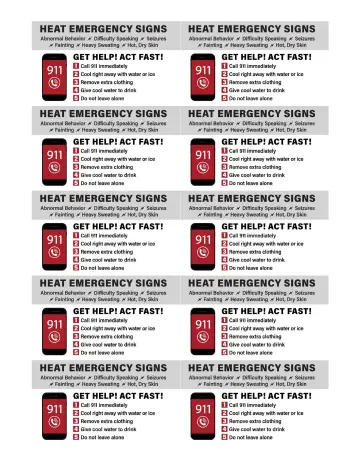
- When to call for help
- Signs of a medical emergency:
- What to do:
- Abnormal thinking or behavior
- Cool right away with water or ice
- Slurred speech
- Call 911 immediately
- Seizures
- Stay with others until help arrives
- Fainting
- If possible, move to shaded area
- Hot, dry skin
- Blurred vision
- Page 3
How to lower risk of heat illness
- Ease into hot work environments
- Dress for the heat
- Monitor work intensity
- Eat water-rich foods
- (e.g., fruits and vegetables)
- Drink cool water
- Watch out for each other
- Take rest breaks in shade or cool areas
- Know and recognize the symptoms of heat illness
- Take action in response to signs and symptoms
- Give cool water to drink
- Remove unnecessary clothing
- Move to a cooler area and use a fan, if available
- Cool with water and ice
- Do not leave alone
- Seek urgent medical care if needed and follow-up with medical provider after any symptoms or signs
- Work with employer and medical provider to prevent future heat stress
- Page 4
Know your rights
- Sources
- 1. Heat – Reproductive Health https://www.cdc.gov/niosh/topics/repro/heat.html
- 2. Occupational Exposure to Heat and Hot Environments https://www.cdc.gov/niosh/docs/2016-106/pdfs/2016-106.pdf
- Federal law requires that workers affected by pregnancy, childbirth or related medical conditions be treated the same as other persons not so affected but similar in their ability or inability to work. Under the Pregnant Workers Fairness Act (PWFA), the Equal Employment Opportunity Commission (EEOC) requires employers to provide “reasonable accommodations” to a worker’s known limitations related to pregnancy, childbirth, or related medical conditions.
- The OSH Act prohibits employers from discriminating against an employee for exercising rights under, or as a result of actions that are required by, the standard. The employee who files a safety and health complaint, or exercises rights is also protected.
- It is ultimately the employer’s responsibility to ensure that the workplace is safe and healthful for workers; however, to be effective, a heat illness prevention program needs the meaningful participation of workers and their representatives.
- For more information on heat illness prevention, scan the QR code or visit osha.gov/heat.
- For information on employment protections for pregnant workers, visit https://www.dol.gov/agencies/wb/pregnant-nursing-employment-protections
- OSHA 4376-09 2023