1 / 40Use ← → to flip
Heat-Related Illnesses (Manager)
Manager version of the heat-related illness training.
Slide text
· 40 slides · by Sonora Environmental Research Institute
The words on each slide as the author wrote them, read from the file by software so they can be searched. Layout, pictures and tables are not shown here: the slides above and the download are the original.
- Slide 1
Heat-Related
- Illnesses: Employer
- Responsibilities
- A Risk Easy to Battle
- This material was produced under grant number SH05051SH8 from the Occupational Safety and Health Administration, U.S.
- Department of Labor. It does not necessarily reflect the views or policies of the U.S. Department of Labor, nor does mention of trade names, commercial products, or organizations imply endorsement by the U.S. Government.
- Slide 2
OSHA
- Under OSHA law:
- Employers have a duty to protect workers from recognized serious hazards including heat-related illnesses.
- Workers have a right to a safe workplace.
- Slide 3
At-Risk Industries
- Construction
- Agricultural
- Firefighting
- Mining
- Bakery, boiler room and factory workers
- Any work indoors or outdoors in a hot environment
- Slide 4
Recommendations
- Determine risk to environmental heat
- Develop a medical monitoring program
- Develop an acclimatization plan for new and returning workers
- Inform and train workers
- Modify work conditions
- Slide 5
Environmental Heat Risk
- Slide 6
Medical Monitoring
- Recommendations for a medical monitoring program:
- Work and medical history
- Physical exam
- Assessment: use of therapeutic drugs, over-the-counter medications, supplements, alcohol, or caffeine
- Assessment: ability to wear personal protective clothing and equipment
- Slide 7
Acclimatization Plan
- Lack of acclimatization – major factor in worker heat-related illness and death
- New and returning workers
- Increasing worker heat tolerance over time
- Workers acclimatize at different rates
- Gradually increase amount of time working in heat over 7-14 days
- Slide 8
Training
- Train employees on recognition, prevention and treatment of heat-related illnesses
- Post educational and hazard warning signs
- Slide 9
Work Conditions
- Engineering controls
- Reduce air temperature and humidity
- Shield heat sources
- Modify hot process
- Work practices
- Limit time in heat – modify schedules Decrease physical requirements of tasks Schedule rest periods
- Provide personal protective clothing for heat Provide adequate amount of cool water
- Slide 10
Resources
- OSHA-NIOSH Heat Safety Tool App - www .cdc.gov/niosh/topics/heatstress/heatapp .html
- OSHA Training Requirements and Resources - www.osha.gov/dte/library/
- Center for Disease Control and Prevention - www.cdc.gov/features/prevent-heat-illness/index.html
- Slide 11
Heat-Related Illnesses: Recognition
- A Risk Easy to Battle
- This material was produced under grant number SH05051SH8 from the Occupational Safety and Health Administration, U.S.
- Department of Labor. It does not necessarily reflect the views or policies of the U.S. Department of Labor, nor does mention of trade names, commercial products, or organizations imply endorsement by the U.S. Government.
- Slide 12
Heat-Related Illnesses
- Caused by environmental exposure to heat
- Can occur indoors as well as outdoors
- Heat rash
- exhaustion
- Heat syncope
- Hyponatremia
- Heat cramps
- Heat stroke
- Heat
- Slide 13
Risk Factors
- Workers who are not acclimatized to heat
- Environmental: High temperatures, high humidity, direct sun exposure and lack of air movement
- Indoor radiant heat sources
- Clothing: multiple layers, dark colors, tight-fitting or restricts air movement
- Not drinking enough fluids - dehydration
- Slide 14
Risk Factors Continued
- Some medications
- Alcohol and caffeine
- Age
- Obesity and lack of physical fitness
- Pregnant workers
- Workers in poor health
- Previous heat-related illness
- Slide 15
Dehydration
- When you use or lose more fluid than you take in
- This material was produced under grant number SH05051SH8 from the Occupational Safety and Health Administration, U.S. Department of Labor. It does not necessarily reflect the views or policies of the U.S. Department of Labor, nor does mention of trade names, commercial products, or organizations imply endorsement by the U.S. Government.
- Slide 16
Heat Cramps
- Muscle cramps or spasms caused by the loss of electrolytes from heavy sweating.
- This material was produced under grant number SH05051SH8 from the Occupational Safety and Health Administration, U.S. Department of Labor. It does not necessarily reflect the views or policies of the U.S. Department of Labor, nor does mention of trade names, commercial products, or organizations imply endorsement by the U.S. Government.
- Slide 17
Heat Exhaustion
- Your body is overheating
- Pale, cool, clammy skin
- Headache, nausea, dizziness
- Heavy sweating
- Irritability
- Thirst
- Elevated body temperature
- This material was produced under grant number SH05051SH8 from the Occupational Safety and Health Administration, U.S. Department of Labor. It does not necessarily reflect the views or policies of the U.S. Department of Labor, nor does mention of trade names, commercial products, or organizations imply endorsement by the U.S. Government.
- Slide 18
Heat Stroke
- Your body can no longer regulate its core temperature
- A true medical emergency.
- Change in mental status
- Loss of consciousness
- Hot, dry, red skin
- Seizures
- Very high body temperature
- This material was produced under grant number SH05051SH8 from the Occupational Safety and Health Administration, U.S. Department of Labor. It does not necessarily reflect the views or policies of the U.S. Department of Labor, nor does mention of trade names, commercial products, or organizations imply endorsement by the U.S. Government.
- Slide 19
Hyponatremia
- Low level of sodium in the blood
- Nausea, vomiting
- Headache, irritability, confusion
- Loss of energy, fatigue and drowsiness
- Muscle weakness or cramps
- Frequent urination
- Seizures, coma
- This material was produced under grant number SH05051SH8 from the Occupational Safety and Health Administration, U.S. Department of Labor. It does not necessarily reflect the views or policies of the U.S. Department of Labor, nor does mention of trade names, commercial products, or organizations imply endorsement by the U.S. Government.
- Slide 20
Heat-Related Illnesses: Prevention
- A Risk Easy to Battle
- This material was produced under grant number SH05051SH8 from the Occupational Safety and Health Administration, U.S.
- Department of Labor. It does not necessarily reflect the views or policies of the U.S. Department of Labor, nor does mention of trade names, commercial products, or organizations imply endorsement by the U.S. Government.
- Slide 21
Prevention
- Heat-related illnesses can be prevented
- Key factors include:
- Training
- Acclimatizing
- Resting in shade
- Drinking fluids
- Monitoring
- This material was produced under grant number SH05051SH8 from the Occupational Safety and Health Administration, U.S. Department of Labor. It does not necessarily reflect the views or policies of the U.S. Department of Labor, nor does mention of trade names, commercial products, or organizations imply endorsement by the U.S. Government.
- Slide 22
Acclimatize
- Acclimatize – increasing your heat tolerance over time
- Gradually increase work time in hot conditions over 10 – 14 days
- After a vacation heat tolerance can be regained in 2 – 3 days.
- Slide 23
Adjust Schedule
- Try to work during the cooler part of day
- New workers may not be acclimatized – adjust schedule to allow time for acclimatization
- This material was produced under grant number SH05051SH8 from the Occupational Safety and Health Administration, U.S. Department of Labor. It does not necessarily reflect the views or policies of the U.S. Department of Labor, nor does mention of trade names, commercial products, or organizations imply endorsement by the U.S. Government.
- Slide 24
Take Frequent Breaks
- Out of direct sun
- Cool, shady location
- Provide a shade structure if no shade available
- Fan to circulate air
- Slide 25
Drink Plenty of Fluids
- A cup of cool water every 15 to 20 minutes
- Water less than 59 °F
- Individual drinking cups
- During prolonged sweating - drinks such as sports drink to replace electrolytes
- This material was produced under grant number SH05051SH8 from the Occupational Safety and Health Administration, U.S. Department of Labor. It does not necessarily reflect the views or policies of the U.S. Department of Labor, nor does mention of trade names, commercial products, or organizations imply endorsement by the U.S. Government.
- Slide 26
Wear Appropriate Clothing
- Hat with a wide brim
- Light-colored, loose-fitting clothing
- Sun glasses
- Sunscreen
- This material was produced under grant number SH05051SH8 from the Occupational Safety and Health Administration, U.S. Department of Labor. It does not necessarily reflect the views or policies of the U.S. Department of Labor, nor does mention of trade names, commercial products, or organizations imply endorsement by the U.S. Government.
- Slide 27
Wear Cooling Garments
- Cooling bands - water evaporates and cool
- Cooling shirts - wick sweat and cool
- Special cooling personal protective equipment
- This material was produced under grant number SH05051SH8 from the Occupational Safety and Health Administration, U.S. Department of Labor. It does not necessarily reflect the views or policies of the U.S. Department of Labor, nor does mention of trade names, commercial products, or organizations imply endorsement by the U.S. Government.
- Slide 28
Monitor
- Use a buddy system
- Don’t work alone
- Monitor each other for signs and symptoms of heat-related illnesses
- This material was produced under grant number SH05051SH8 from the Occupational Safety and Health Administration, U.S. Department of Labor. It does not necessarily reflect the views or policies of the U.S. Department of Labor, nor does mention of trade names, commercial products, or organizations imply endorsement by the U.S. Government.
- Slide 29
Heat-Related Illnesses: Treatment
- A Risk Easy to Battle
- This material was produced under grant number SH05051SH8 from the Occupational Safety and Health Administration, U.S.
- Department of Labor. It does not necessarily reflect the views or policies of the U.S. Department of Labor, nor does mention of trade names, commercial products, or organizations imply endorsement by the U.S. Government.
- Slide 30
Review
- Dehydration
- Heat-Related Illnesses
- Heat rash
- Heat syncope
- Hyponatremia
- Heat cramps
- Heat stroke
- exhaustion
- Heat
- Slide 31
Heat Stroke: Call
- CALL 911 - Heat stroke is a medical emergency
- This material was produced under grant number SH05051SH8 from the Occupational Safety and Health Administration, U.S. Department of Labor. It does not necessarily reflect the views or policies of the U.S. Department of Labor, nor does mention of trade names, commercial products, or organizations imply endorsement by the U.S. Government.
- Slide 32
Heat Stroke: Cool
- Move to shady cool area
- Cool the worker any way you can
- This material was produced under grant number SH05051SH8 from the Occupational Safety and Health Administration, U.S. Department of Labor. It does not necessarily reflect the views or policies of the U.S. Department of Labor, nor does mention of trade names, commercial products, or organizations imply endorsement by the U.S. Government.
- Slide 33
If the worker is responsive, give cool water to drink
- Heat Stroke: Drink
- This material was produced under grant number SH05051SH8 from the Occupational Safety and Health Administration, U.S. Department of Labor.
- It does not necessarily reflect the views or policies of the U.S. Department of Labor, nor does mention of trade names, commercial products, or organizations imply endorsement by the U.S. Government.
- Slide 34
Call 911 if no medical assistance on site
- Heat Exhaustion:
- Call
- Move worker to a cool shady area
- This material was produced under grant number SH05051SH8 from the Occupational Safety and Health Administration, U.S. Department of Labor.
- It does not necessarily reflect the views or policies of the U.S. Department of Labor, nor does mention of trade names, commercial products, or organizations imply endorsement by the U.S. Government.
- Slide 35
Loosen tight clothing and remove extra layers
- Heat Exhaustion:
- Cool
- Cool the worker
- This material was produced under grant number SH05051SH8 from the Occupational Safety and Health Administration, U.S. Department of Labor. It does not necessarily reflect the views or policies of the U.S. Department of Labor, nor does mention of trade names, commercial products, or organizations imply endorsement by the U.S. Government.
- Slide 36
Heat Exhaustion:
- Drink
- Give cool drinks
- Water or sports drinks
- No coffee or alcohol
- This material was produced under grant number SH05051SH8 from the Occupational Safety and Health Administration, U.S. Department of Labor. It does not necessarily reflect the views or policies of the U.S. Department of Labor, nor does mention of trade names, commercial products, or organizations imply endorsement by the U.S. Government.
- Slide 37
Hyponatremia: Eat
- Move the worker to a cool, shady area
- If the worker is responsive have them eat salty snacks
- No salt tablets
- Slide 38
Hyponatremia: Call
- If the worker is
- Confused, disoriented or unresponsive,
- Has a heart condition, or
- Not improving within an hour.
- This material was produced under grant number SH05051SH8 from the Occupational Safety and Health Administration, U.S. Department of Labor. It does not necessarily reflect the views or policies of the U.S. Department of Labor, nor does mention of trade names, commercial products, or organizations imply endorsement by the U.S. Government.
- Slide 39
Heat Cramps: Treatment
- Move the worker to a cool, shady area to rest
- Have worker eat salty snacks and drink sports drinks
- Call for medical assistance if not improving within an hour
- Slide 40
Case Study
- You and your coworker have been working outside on a construction site for several hours. It’s one of the first really hot days of the year. You notice that your coworker is really sweating a lot and looks a little pale. When you ask him how he is feeling, he tells you that he feels a little dizzy and nauseous.
More on Heat
pdf
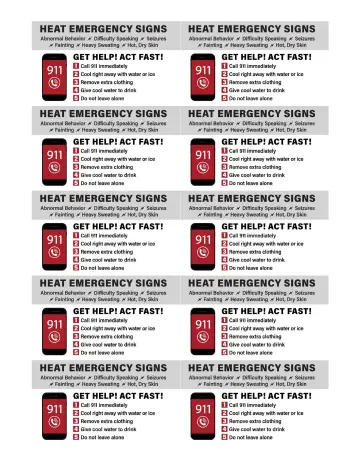
2 slidesHeat Emergency Wallet Card (OSHA 4403)
OSHA card or poster, for General Industry classes.
U.S. Department of Labor, OSHAPublic domain
pdfes
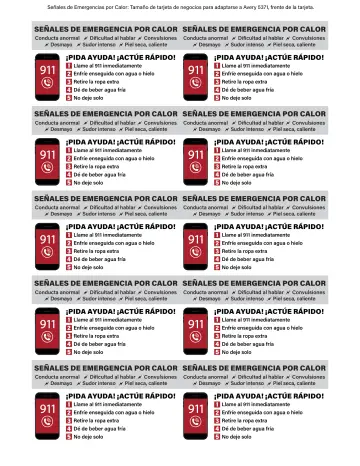
2 slidesHeat Emergency Wallet Card (OSHA 4404) (en español)
OSHA card or poster, in Spanish, for General Industry classes.
U.S. Department of Labor, OSHAPublic domain
pdf
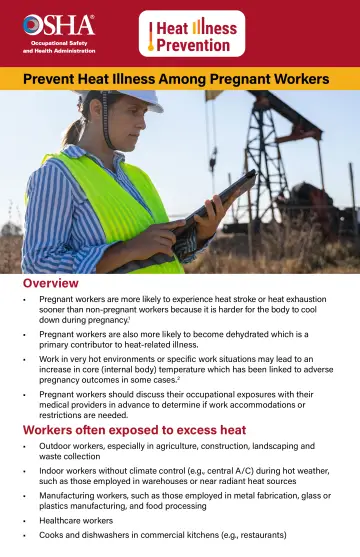
4 slidesHeat Illness Prevention: Prevent Heat Illness Among Pregnant Workers Fact Sheet (OSHA 4376)
OSHA fact sheet or bulletin, for General Industry classes.
U.S. Department of Labor, OSHAPublic domain