OSHA fact sheet or bulletin, for General Industry classes.
Page text
· 2 pages · by U.S. Department of Labor, OSHA
The words on each page as the author wrote them, read from the file by software so they can be searched. Layout, pictures and tables are not shown here: the pages above and the download are the original.
- Page 1
FactSheet
- Protecting Workers from Combustible Dust Explosion Hazards
- Combustible dusts can fuel a flash fire or explosion when dispersed in a dust cloud. Workers in many industries who handle combustible solids may be exposed to combustible dust incidents that can cause catastrophic destruction, injuries and deaths. Employers and workers should take the steps below to control the fuel and prevent tragic consequences.
- Control the Fuel (Dust) and Avoid Incidents
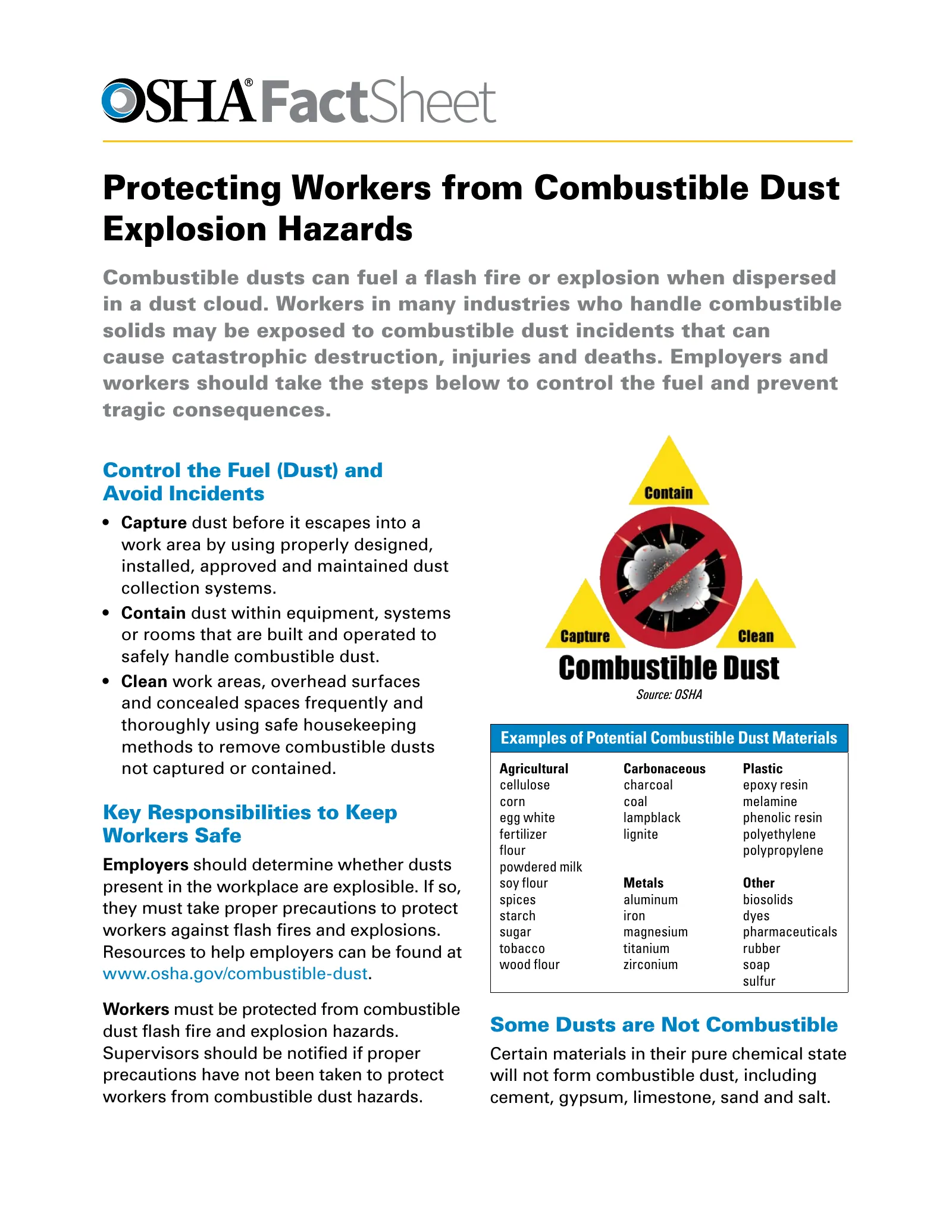
- Capture dust before it escapes into a work area by using properly designed, installed, approved and maintained dust collection systems.
- Contain dust within equipment, systems or rooms that are built and operated to safely handle combustible dust.
- Clean work areas, overhead surfaces and concealed spaces frequently and thoroughly using safe housekeeping methods to remove combustible dusts not captured or contained.
- Key Responsibilities to Keep
- Workers Safe
- Employers should determine whether dusts present in the workplace are explosible. If so, they must take proper precautions to protect workers against flash fires and explosions. Resources to help employers can be found at www.osha.gov/combustible-dust.
- Workers must be protected from combustible dust flash fire and explosion hazards.
- Supervisors should be notified if proper precautions have not been taken to protect workers from combustible dust hazards.
- Source: OSHA
- Examples of Potential Combustible Dust Materials
- Agricultural cellulose
- corn
- egg white fertilizer
- flour powdered milk soy flour spices starch sugar tobacco wood flour
- Carbonaceous charcoal
- coal lampblack lignite
- Plastic
- epoxy resin melamine phenolic resin polyethylene polypropylene
- Metals aluminum iron magnesium titanium zirconium
- Other
- biosolids
- dyes pharmaceuticals rubber soap sulfur
- Some Dusts are Not Combustible
- Certain materials in their pure chemical state will not form combustible dust, including cement, gypsum, limestone, sand and salt.
- Page 2
Workers’ Rights
- Workers have the right to:
- Working conditions that do not pose a risk of serious harm.
- Receive information and training (in a language and vocabulary the worker understands) about workplace hazards, methods to prevent them, and the OSHA standards that apply to their workplace.
- Review records of work-related injuries and illnesses.
- File a complaint asking OSHA to inspect their workplace if they believe there is a serious hazard or that their employer is not following OSHA’s rules. OSHA will keep all identities confidential.
- Exercise their rights under the law without retaliation, including reporting an injury or raising health and safety concerns with their employer or OSHA. If a worker has been retaliated against for using their rights, they must file a complaint with OSHA as soon as possible, but no later than 30 days.
- For additional information see OSHA’s
- Workers page (www.osha.gov/workers).
- How to Contact OSHA
- Under the Occupational Safety and Health
- Act of 1970, employers are responsible for providing safe and healthful workplaces for their employees. OSHA’s role is to ensure these conditions for America’s workers by setting and enforcing standards, and providing training, education and assistance. For more information, visit www.osha.gov or call OSHA at 1-800-321-
- OSHA (6742), TTY 1-877-889-5627.
- This is one in a series of informational fact sheets highlighting OSHA programs, policies or standards. It does not impose any new compliance requirements. For a comprehensive list of compliance requirements of OSHA standards or regulations, refer to Title 29 of the Code of Federal Regulations. This information will be made available to sensory-impaired individuals upon request. The voice phone is (202) 693-1999; teletypewriter (TTY) number: 1-877-889-5627.
- DSG FS-3878 06/2016