Pocket card on heat illness symptoms and first aid.
Page text
· 2 pages · by U.S. Department of Labor, OSHA
The words on each page as the author wrote them, read from the file by software so they can be searched. Layout, pictures and tables are not shown here: the pages above and the download are the original.
- Page 1
CARD
- QUICK
- TM
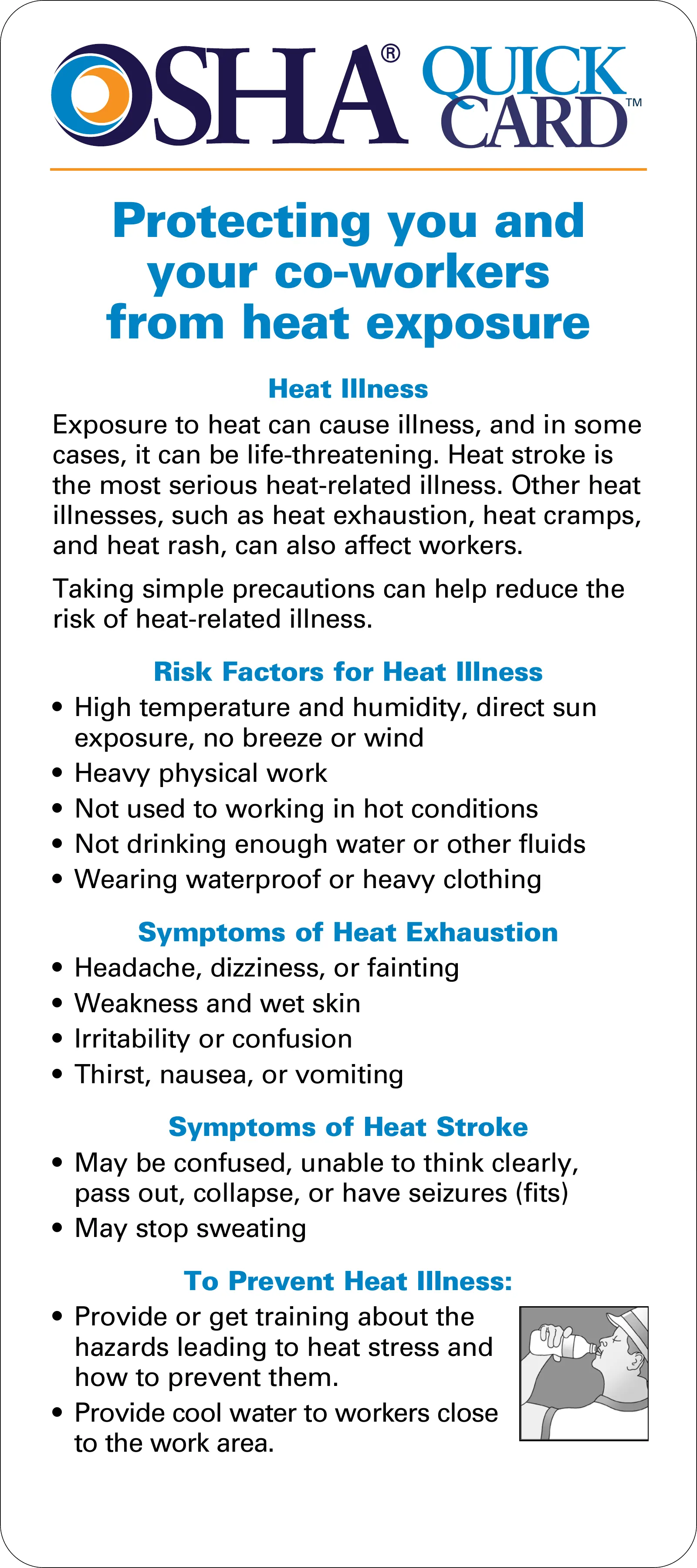
- Protecting you and your co-workers from heat exposure
- Heat Illness
- Exposure to heat can cause illness, and in some cases, it can be life-threatening. Heat stroke is the most serious heat-related illness. Other heat illnesses, such as heat exhaustion, heat cramps, and heat rash, can also affect workers.
- Taking simple precautions can help reduce the risk of heat-related illness.
- Risk Factors for Heat Illness
- High temperature and humidity, direct sun exposure, no breeze or wind
- Heavy physical work
- Not used to working in hot conditions
- Not drinking enough water or other fluids
- Wearing waterproof or heavy clothing
- Symptoms of Heat Exhaustion
- Headache, dizziness, or fainting
- Weakness and wet skin
- Irritability or confusion
- Thirst, nausea, or vomiting
- Symptoms of Heat Stroke
- May be confused, unable to think clearly, pass out, collapse, or have seizures (fits)
- May stop sweating
- To Prevent Heat Illness:
- Provide or get training about the hazards leading to heat stress and how to prevent them.
- Provide cool water to workers close to the work area.
- Page 2
CARD
- QUICK
- TM
- Adjust work schedules or arrange frequent rest periods with water breaks in shaded or air-conditioned areas.
- Gradually increase workloads and provide breaks for workers who are new to the heat or returning after time away.
- Designate a responsible person to monitor conditions and protect workers who are at risk of heat stress.
- Consider protective clothing that provides cooling.
- How to Protect Workers
- Know signs/symptoms of heat illnesses; monitor yourself; use a buddy system.
- Block out direct sun and other heat sources when possible.
- Drink plenty of fluids.
- Avoid beverages containing alcohol or caffeine.
- Wear lightweight, light colored, loose‑fitting clothes.
- For more information:
- OSHA.gov
- (800) 321-OSHA (6742)
- OSHA 3154-07R 2026
- Act Quickly
- If someone is not alert or seems confused, this may be a heat stroke. Call 911 immediately and apply ice as soon as possible. Stay with them until help arrives.
- Move the worker to a cooler/shaded area.
- Remove outer clothing.
- Fan and mist the person with water; apply ice (ice bags or cold towels).
- Provide cool drinking water, if they are able to drink.