OSHA fact sheet on heat illness types and first aid.
Page text
· 2 pages · by U.S. Department of Labor, OSHA
The words on each page as the author wrote them, read from the file by software so they can be searched. Layout, pictures and tables are not shown here: the pages above and the download are the original.
- Page 1
Heat-Related Illnesses and First Aid
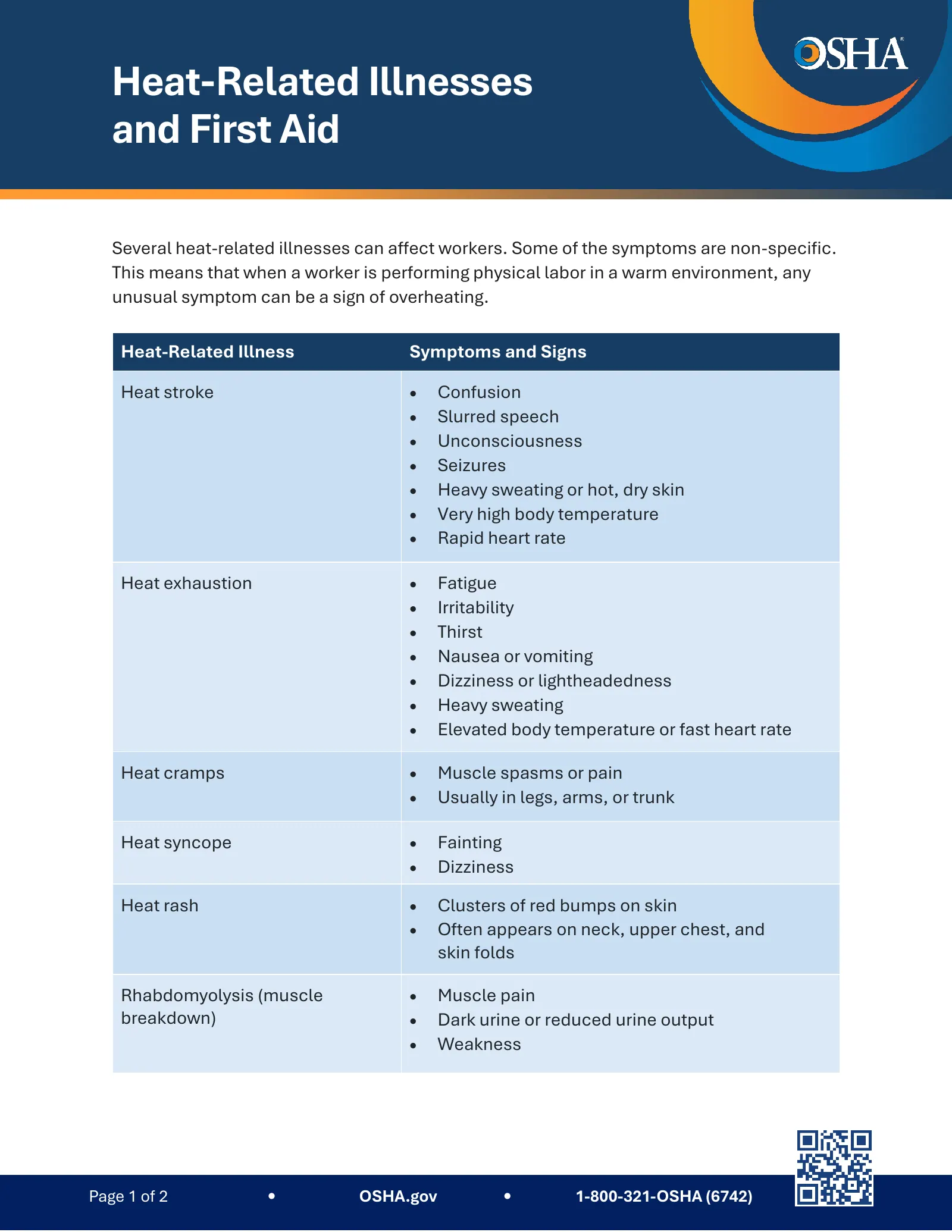
- Several heat-related illnesses can affect workers. Some of the symptoms are non-specific. This means that when a worker is performing physical labor in a warm environment, any unusual symptom can be a sign of overheating.
- Heat-Related Illness
- Symptoms and Signs
- Heat stroke
- Heat exhaustion
- Heat cramps
- Heat syncope
- Heat rash
- Rhabdomyolysis (muscle breakdown)
- OSHA.gov
- Confusion
- Slurred speech
- Unconsciousness
- Seizures
- Heavy sweating or hot, dry skin
- Very high body temperature
- Rapid heart rate
- Fatigue
- Irritability
- Thirst
- Nausea or vomiting
- Dizziness or lightheadedness
- Heavy sweating
- Elevated body temperature or fast heart rate
- Muscle spasms or pain
- Usually in legs, arms, or trunk
- Fainting Dizziness
- Clusters of red bumps on skin
- Often appears on neck, upper chest, and skin folds
- Muscle pain
- Dark urine or reduced urine output
- Weakness
- 1-800-321-OSHA (6742)
- Page 2
First Aid
- OSHA’s Medical Services and First Aid standard and the Medical Service and First Aid in Construction require the ready availability of first aid personnel and equipment. First aid for heat-related illnesses involves the following principles:
- Take the affected worker to a cooler area (e.g., shade or air conditioning).
- Cool the worker immediately. Use active cooling techniques such as:
- Immerse the worker in cold water or an ice bath. Create the ice bath by placing all of the available ice into a large container with water, standard practice in sports. This is the best method to cool workers rapidly in an emergency.
- Remove outer layers of clothing, especially heavy protective clothing.
- Place ice or cold wet towels on the head, neck, trunk, armpits, and groin.
- Use fans to circulate air around the worker.
- Never leave a worker with heat-related illness alone. The illness can rapidly become worse. Stay with the worker.
- When in doubt, call 911!
- Confusion, slurred speech, or unconsciousness are signs of heat stroke. When these types of symptoms are present, call 911 immediately and cool the worker with ice or cold water until help arrives.
- OSHA 4506-07 2026
- Workers who are new to working in warm environments are at increased risk of heatrelated illness. See the Protecting New Workers section of this website for more details. Especially during a worker's first few days, absolutely all symptoms should be taken seriously. Workers who develop symptoms should be allowed to stop working. They should receive evaluation for possible heat-related illness.
- OSHA.gov
- 1-800-321-OSHA (6742)